
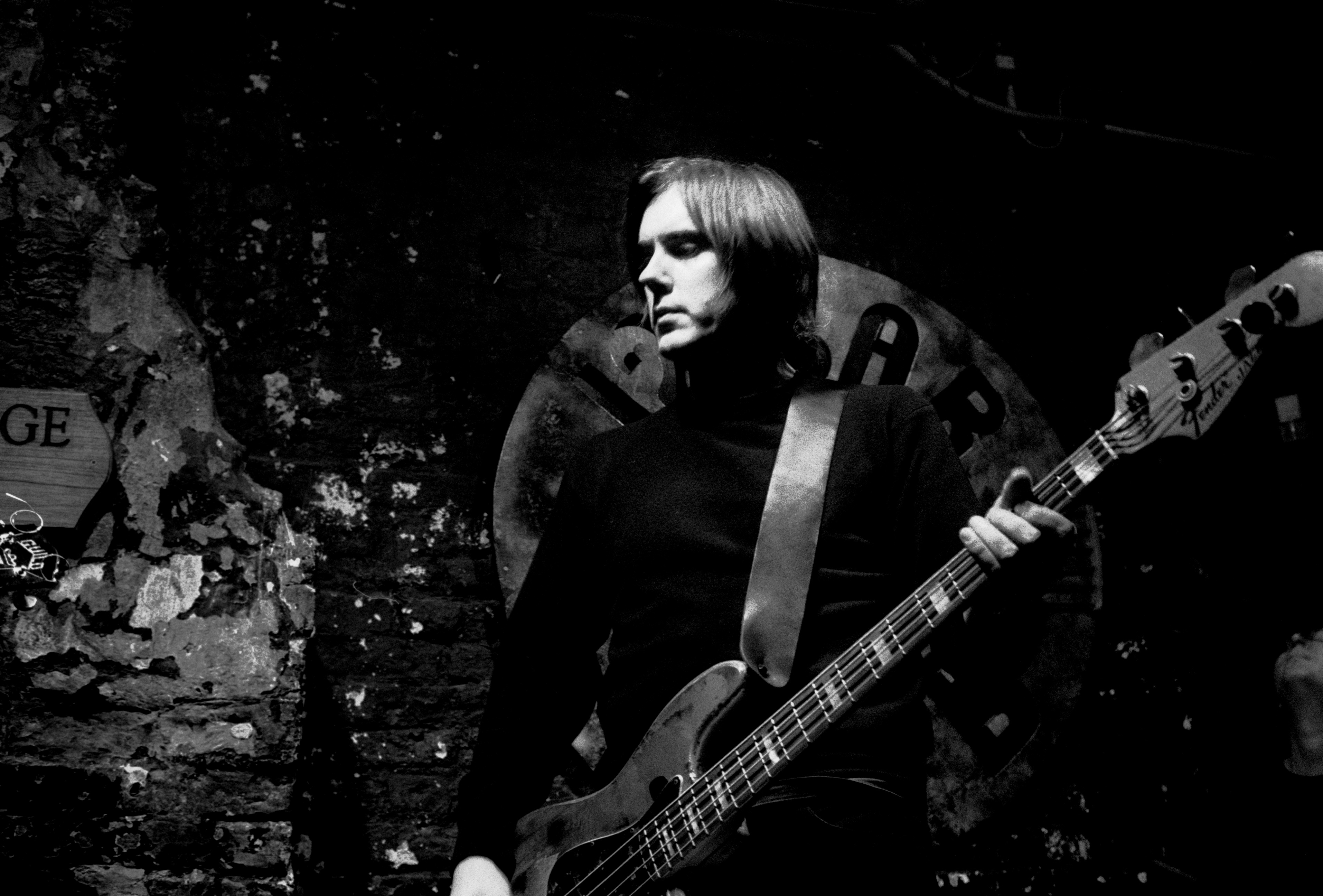
Philip King takes the label of “the indie Zelig” with good humour. Over four decades, he’s lent his guitar chops to the likes of Lush, The Jesus & Mary Chain, Biff Bang Pow!, The Servants, Felt, Hangman’s Beautiful Daughters, amongst many others and during the interval, fronted the splendid, though short-lived, Creation Records jangle-pop group, Apple Boutique. King’s new venture, Feel, alongside two other Felt alumni, Gary Ainge and Marco Thomas (plus keyboardist Martin Davies and lead guitarist Andy Wellings), debuted a rightfully acclaimed set of Felt songs at this year’s Glas-Goes Pop festival. As you’ll read below, the road was never smooth for very long but King’s ability to stand tall beside some of indie rock’s most interesting characters and to roll with the punches, makes for a fascinating read.
We meet at the Barbican on a beautiful, sunny, September day and jump straight into his fond memories of playing with The Jesus & Mary Chain.
Philip : Jim is a bit deaf in his left ear because of William’s guitar and he could never hear properly, so he’d shout “Stoppppp!” and literally stop the song dead. We did ‘Just Like Honey’ at the Royal Festival Hall, with Liela Moss from Duke Spirit on backing vocals and he stopped the song numerous times. You could see she was thinking, “What the hell is going on?” He doesn’t to do it anymore, now he’s got his in-ears. At least it prepared one for the worst-case scenario. Saying that, not splitting up onstage!
I went to see them on a tour where they played at Northampton Roadmenders and after the show, I said to William, “That was really professional.” He went, “Professional?! What do you mean?!” Like it was an insult. You’ve got to be careful with Jim and William because if you give them a compliment, they’re very suspicious. Then again, if you insult them, they don’t like that either!
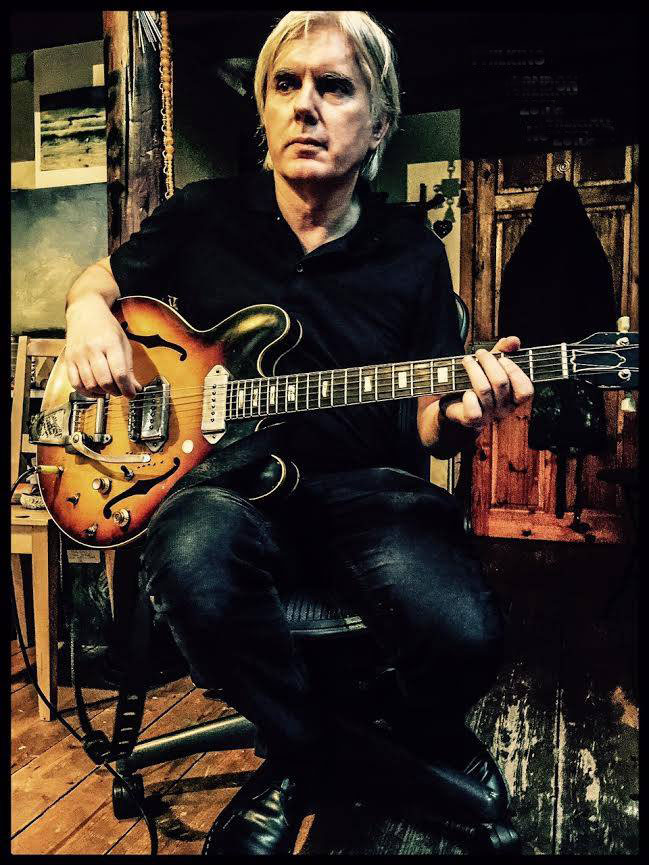
Glen : We could start anywhere really but I already know quite a lot about you given that I’m a fan of a lot of the bands you were in.
P : “Indie Zelig.” I think Pete Paphides thought that one up.
Glen : So, going all the way back, you were born in Morden?
Philip : Yes, the end of the Northern Line. There was even a pub there for a while called The End Of The Line and that kind of summed it up really. The only reason you’d ever go to Morden is if you fall asleep on the train. You’d see people after an evening in the pub in town and they’d be asleep at Morden. There’s no other reason to go there.
I remember going to a party once and there were some Germans at it who asked me where I lived and I said, “Morden.” And they went, “Ha ha! Morden!” That means to commit murder in German. It’s just boring suburbia, really. I live in Putney now, which comparatively, for me, is like the gateway to London.
G : Was there any scene in Morden when you were a kid?
P : No, there wasn’t at all.
G : But you were going out to gigs elsewhere?
P : Well, I’ve got a confession to make here : before punk, I used to go and see hard rock bands. I blame it on a friend at school, Pete Bartlett. I was more into Bowie, Roxy Music, Lou Reed, Mott The Hoople, that kind of thing but I went to gigs with him, as there weren’t many other good gigs on around then, although we did see Alice Cooper and Roxy Music at the Empire Pool, Wembley. Also, Led Zeppelin at Earl’s Court. I taped that one; had a Philips mono cassette recorder tucked down a football sock inside my Oxford Bags. On two C120 cassettes. Lost them during the “Punk Rock Wars.”
The only good thing about living in the London suburbs in the ‘70s was that there were pub and university venues everywhere. You could go to Croydon Greyhound, Kingston Uni, Toby Jug in Tolworth, Putney. So, you didn’t have to go into London really but I did go into London as well, to the Marquee or whatever but the first gig I saw was a local one – Wizzard at Sutton Granada and I sat next to Rob Davis, the guitarist from Mud, who was there with his girlfriend. That was 1974. Around 1975, I used to go to hard rock shows : Judas Priest, UFO, AC/DC. ‘Sad Wings Of Destiny’ by Judas Priest – that could almost be a Felt album title, don’t you think? From the age of about twelve, I did like groups like T.Rex but Bowie was the thing that really turned my head, like for most people of my age. The glam thing is very British, isn’t it? It carries on from vaudeville, dressing up and looking quite tacky. Although Bowie and Roxy Music did it with a lot more class and an art school sensibility.
G : Do you have any siblings into music?
P : I had an older brother. We used to occasionally buy albums together but he wasn’t really that into music and I didn’t have much money, so I only got albums at Christmas. Aside from that, it was more chart singles. Actually, out-of-chart singles, as they were cheaper. That’s how I got into more obscure singles – as Cheapo Cheapo (record shop) in Soho had ex-review copies of singles from the music papers and you would see something that was Single Of The Week, such as Metro’s ‘Criminal World’ or Roderick Falconer’s ‘Play It Again’ and you’d buy it and love it.
G : And at school, did you gravitate more towards people who were into music?
P : Oh, definitely. There tended to be a Bowie clone in every year. I wasn’t brave enough to be one. Actually, the Bowie clone in the year below, Mik Sweeney, ended up being the bass player in Classix Nouveaux. He was the one with the big quiff. Where I live now in Putney, on the corner, opposite Putney station, I used to go and see punk gigs in about ’77. X-Ray Spex and groups like that.
G : So, your first band, The Beautiful Losers – from the Leonard Cohen book title? How did that all come together?
P : Well, sadly, I’m going to the funeral of the drummer next week, Ray Jordan. Just the usual beginnings, you know, Punk – none of us could really play properly and bought instruments and bashed away. And then we met Adrian Borland, who was in The Outsiders at the time, who were from Wimbledon, which is near to Morden. We all used to go to a pub called The Crooked Billet near Wimbledon Common.
Adrian was always very enthusiastic about music and playing. So, he helped us out, took us under his wing. And when we became The Beautiful Losers, we supported him, in the early days of The Sound, around 1980. And then he produced us in the studio as well.
In fact, there’s a compilation called ‘Messthetics.’ Do you know it? There’s a guy who does compilations of DIY recordings from different regions around Britain. He does them area by area. And I sent him The Beautiful Losers and he said, “No, it’s too professional. It sounds better produced than Joy Division!” Adrian was a very enthusiastic and great producer.
G : The Beautiful Losers stuff has got a very Factory Records vibe, hasn’t it?
P : It’s junk shop Joy Division. The track ‘Late Night Show,’ is obviously like ‘Transmission.’ We recorded it a couple of months after ‘Transmission’ came out. I went to see Joy Division at ULU and I couldn’t get in but I could hear them and I thought, “Oh, I’ll go and see them next time.” But Ian Curtis was dead within a couple of weeks.
G : How did you get into playing guitar?
P : I remember reading that Paul Simonon would have little stickers on the neck of his bass. I had a How To Play book and it had the same thing but for barre chords. Back then, guitar tuners were expensive. So, even though you’re out of tune, you’d just bash away on the chords. I had a Shaftesbury Les Paul, which almost made your fingers bleed, as the frets were so high. Shaftesbury because it was made in Shaftesbury Avenue. But I think it was good really, in a way. You’d just stick at it. My Uncle Sean lived with us and he used to repair TVs and radios and I bought a little practice amp from a jumble sale and he put a TV speaker in it and because it was small, it would immediately distort. So, it gave it a really punky sound. And then it would blow after about a month or so and he’d put another one in.
G : What was your impetus for learning to play?
P : I know it’s a bit of a cliché, like most people, Punk, really. Because before that, I remember the NME tried to help people to learn to play the guitar. In about ’74 or ‘75, they had a pull-out guide every week. And it just put you off, really because you had Robert Fripp saying, “Oh, I practice eighteen hours a day.” And then there was Steve Howe’s amazing vintage guitar collection. I think the only thing I learned was the strings because it was : “Every Armpit Does Get Body Odour Eventually” (EADGBE).
G : So how did The Beautiful Losers actually come about?
P : I met Ray and Pete, they were friends. And then we said, let’s get a band together. Ray wasn’t really a drummer at the time and Pete wasn’t a bass player but we just bought the instruments and rehearsed. I’ve got diary entries about us buying our drum kit from The Outsiders and about seeing The Outsiders, live. You can see the drumkit in a photo of Iggy Pop singing ‘Search & Destroy’ with The Outsiders at The Roxy.
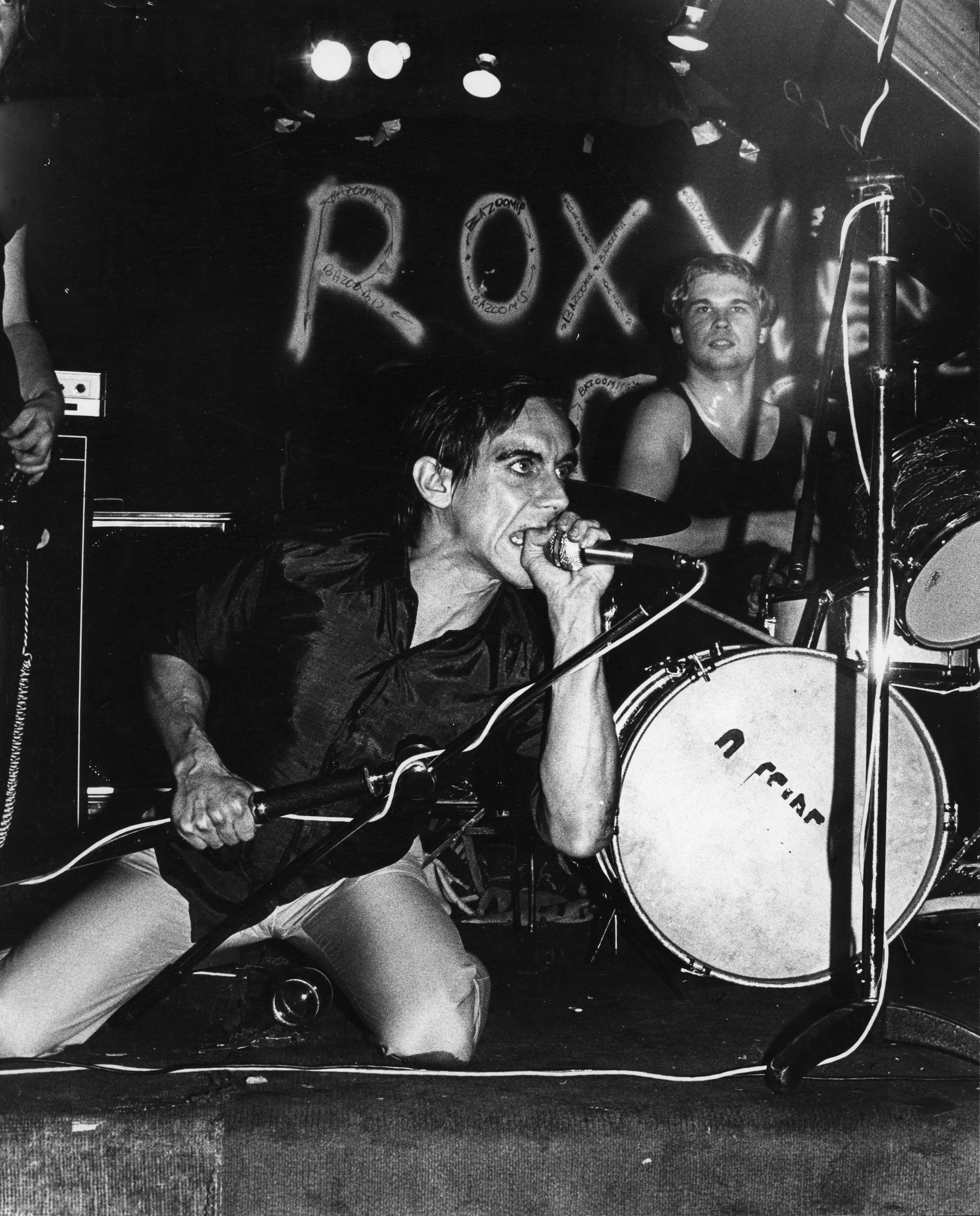
“I went up to The Crooked Billet in Wimbledon Village, where I met Adrian Borland from The Outsiders, who told me he may be able to get me a drumkit for £40.” – Diary entry, Friday December 29 1978
“I made a call to Adrian Borland about the drumkit. Between noises from rehearsals in his front room, his drummer told me he had a hi-hat, a slightly damaged snare, a crash cymbal and a bass drum for sale. He told me we could fix a date to go and have a look and make him an offer and that he didn’t expect much for it.” – Diary entry, Wednesday January 17 1979
“The Outsiders were just starting up when we got in. For a second, I thought a record was playing through the PA, as the sound was so good. Adrian Borland was on stage with his make up on, the bassist wore wraparound shades and a loon T-shirt, which made him look like a reject from The Saints. The drummer had short blonde hair and was wearing what looked like a pyjama top. Adrian’s guitar playing reminded me a lot of James Williamson with his short rapid bursts of soloing. One of the songs was called ‘Semi-Detached Life.’” – Diary entry, February 2nd 1979
G : So, originally, were you recording at home?
P : I bought an Akai reel-to-reel because this was pre-Portastudios – an Akai 4000DB. I had the DB, the Dolby version and if you pulled out the pots, you could do sound-on-sound on it. Also, a friend of mine had one and we tried Frippertronics, you know where you wind the tape around the room to another tape machine? It’s amazing. I did actually see Robert Fripp doing Frippertronics at the time. I was just amazed that you could just build up that wave of sound.
G : So, you didn’t put a record out with The Beautiful Losers?
P : No, we just did our recordings of three songs plus four gigs – two supporting The Sound and two others. And then we split up. The three songs and a demo I recorded on the Akai reel-to-reel, eventually came out on a German label called Genetic Music, in 2013.
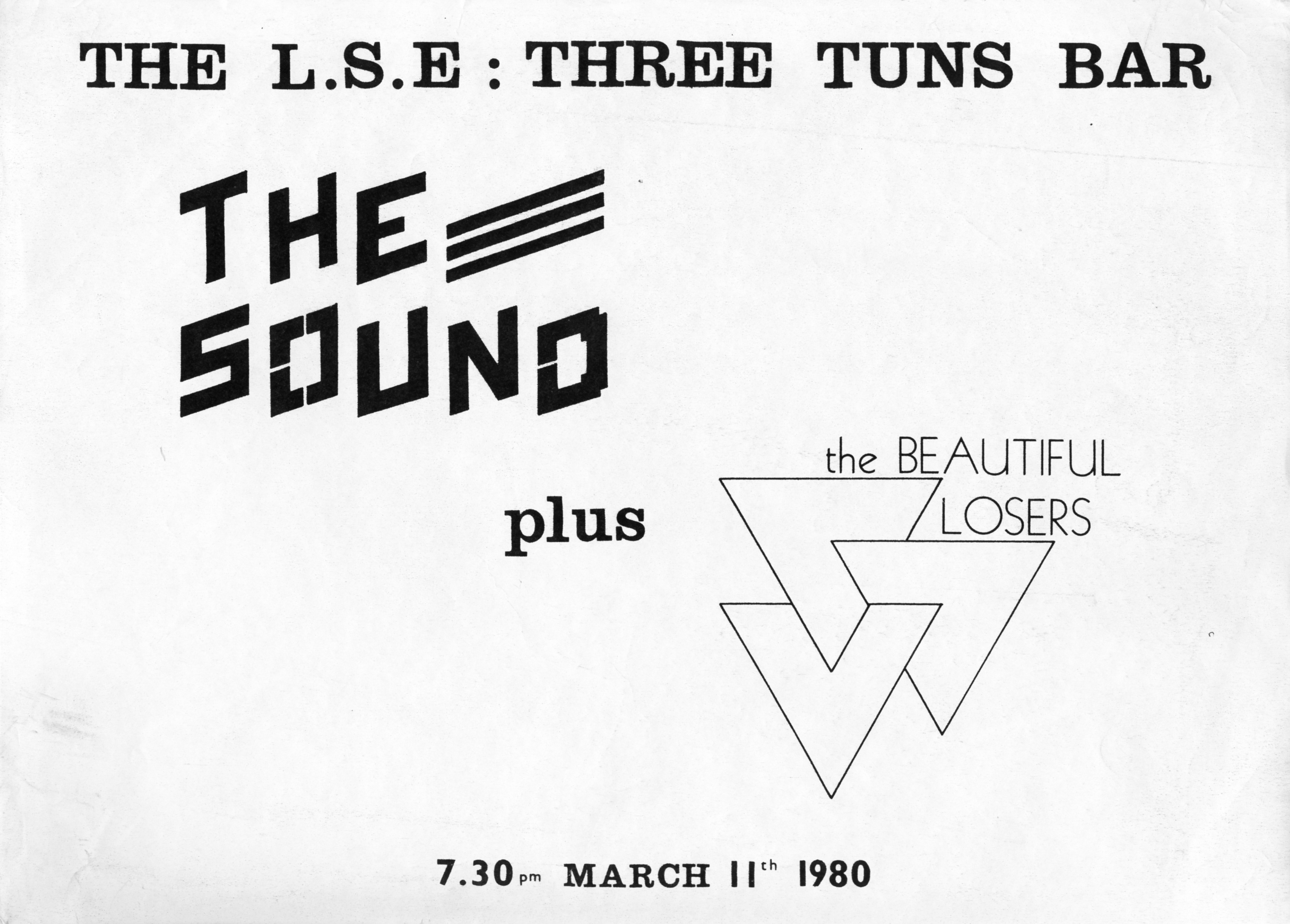
G : It must’ve been really exciting to see The Sound at that time? Did you know they had something special?
P : No-one seemed to be that interested early on, to be honest. I used to go and see them at Fulham Greyhound, The Venue in Victoria, supported them at the LSE, the Moonlight Club in West Hampstead, which Felt played as well actually, around the same time. They supported Modern English and they got signed to Cherry Red. There wasn’t that big an audience for them (The Sound) really. Adrian used to worry about his weight I remember, that he wasn’t skinny.
G : It’s all about the songs though, ultimately?
P : What lives on is the music but at the time, unfortunately, it was about how you looked too. I remember Adrian saying to me once he met Mark E. Smith and his put-down was, “Oh yeah, you’re from Surr-ey,” in a posh accent. Adrian was a great guy, he really was and a really enthusiastic producer. Later on, I worked with other producers, like Mayo Thompson, who literally fell asleep in the chair when Felt were recording. He did the same with Primal Scream.
I didn’t do anything for a year or so after we split. I was a bit jaded, I guess…because you had people like Roddy Frame, who was eighteen. And, you know, I was twenty-one. I felt past it at twenty-one! So, I didn’t do anything. And then I wrote a song with my girlfriend, kind of folky. Second Layer (post-punk, primarily electronic project of Adrian Borland Graham Bailey of The Sound) backed us. We did it at the same studio as The Sound and The Beautiful Losers, Elephant Studios in Wapping. Graham had this rhythm generator he built and he played bass. And Adrian did some kind of Fripptronic guitar. I sent an early version of the song, ‘Skylon,’ to Postcard and got a rejection letter from them. None more Indie than that!
G : Aren’t you playing on one of those Second Layer records?
P : Well, that’s it – the track’s a bonus track on the first album re-issue. At that point they were talking about getting other musicians in, like B.E.F. and they would back you but it didn’t come to anything. So, that didn’t come out until 2009 and on single, on Captured Tracks, in 2014.
G : And after The Beautiful Losers, you joined The Servants?
P : Well, David (Westlake) put an ad in the NME. I remember reading at the time about how The Smiths formed, that Johnny Marr had just turned up at Morrissey’s house. So, I did the same. I had this ‘60s Humber Sceptre and I drove round to David’s in Hayes and he was having his bath and his mum let me in and I waited and David and I had a chat. There had been a bass player before who was a friend of his (Ed Moran) but he left anyway. So, initially, it was John Mohan, David and myself but I wasn’t even playing bass at first. In fact, that version of ‘Stephanie’ I sent you has got me playing guitar like a bass on it. But then Ed had a bass, a short scale Fender Musicmaster, so I started playing on that.
G : So, this was your first experience of becoming a bass player?
P : Like most bass players, you end up playing the bass by default really. I don’t think many people actually think, “I want to be a bass player.”
G : Do you remember going out and buying your first bass?
P : I do. I bought an Epiphone Rivoli – which was a ‘60s semi-acoustic. Really boomy. You could see why it was popular in the ‘60s. It would certainly fill out the sound in a club.
G : And did you have an instant rapport with David Westlake?
P : He got me into Love. I was into The Doors and liked early Pink Floyd – but he played me ‘Between Clark and Hilldale’ (from Love’s ‘Forever Changes’) and I was like, “Wow!”
G : What year was this?
P : 1984.
G : I was going to say there was this big change in the wind direction around 1984, where guitars suddenly became a dominant force again after years of synthpop, undoubtedly much to do with The Smiths becoming popular. Synth music suddenly became rather unpopular very quickly.
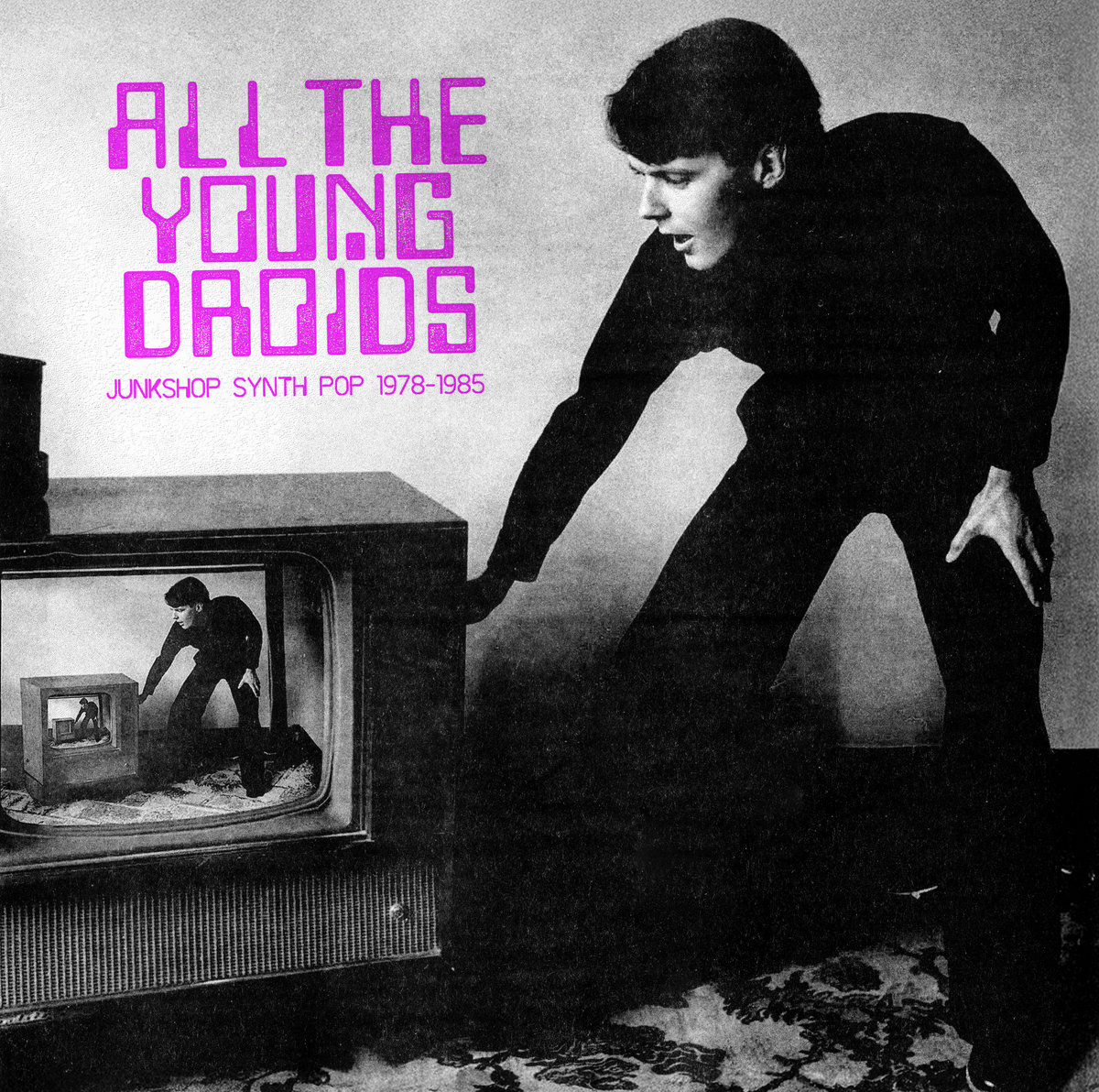
P : The irony is that I’m now compiling synth compilations (‘All The Young Droids’).
G : So, did you just navigate around the whole synthpop boom at that time?
P : I used to go and see The Human League, live, when they played in pubs like The Nashville in West Kensington, The Marquee, The Rainbow, The Lyceum. I loved them. But as on my recent ‘All The Young Droids’ compilation, I liked the early days of synth, where it was more DIY. When it got to Linn drums and Emulators, when you’re trying to copy a proper instrument and it became less BBC Radiophonic Workshop, less weird noises, that’s where I lost interest.
G : The last time we met, we were talking about how, in the mid-‘80s, a lot of people got into the ‘60s for the first time.
P : Also, concurrently, there was a re-showing of ‘Ready, Steady, Go’ on Channel 4. I think I probably said to you before but post-Joy Division, there’s this horrible ‘82/’83 period where it was positive punk and Goth. And even a lot of post-punk had thrown out the baby with the bath water – no real tunes. The only thread that kept me going was Felt. And the fact that they were on a label like Cherry Red, who weren’t that forward in promoting them, it made them seem mysterious, so I didn’t know much about them. I didn’t know who Lawrence was, really. It was just about the music. So, that’s why it’s great now with Feel, making it all just about the music again.
Glen : Did you buy (the legendary Cherry Red budget compilation), ‘Pillows And Prayers?’ Was that your first exposure to Felt?
P : No, I didn’t actually. It’s funny because Pete, the bass player in The Beautiful Losers, bought ‘Index’ (Felt’s debut single). I remember going round to his council flat in Pollards Hill in Mitcham and listening to it. It got Single Of The Week in Sounds (magazine). I heard it and I just thought, “I’m not buying that rubbish!” Because it’s just recorded on his (Lawrence’s) cassette machine. But then, funnily enough, The Sound played Futurama in ‘81 and Felt were on the bill. And what had happened was that they (Felt) were going to the gig and Lawrence always wanted to handle the money but Maurice (Deebank) wasn’t happy about it because he wanted to be paid and Lawrence, being stubborn, said no. So, Maurice got out of the van and Gary (Ainge) and Lawrence did the gig on their own. Gary had to get some bins and cover them with gaffer tape and fashion some bongos out of them. So, it was Lawrence on acoustic guitar and Gary on homemade bongos, playing in this cavernous hall, Futurama in Leeds.
I was into Tyrannosaurus Rex at the time and Adrian came back and said, “Oh, you’d love this group, Felt – they’re like Tyrannosaurus Rex.” Funnily enough, Adrian was meant to produce Felt’s first album, ‘Crumbling The Antiseptic Beauty’ which, when it came out, got a rave review in Melody Maker, so I went to my local record shop in Sutton and I got the guy behind the counter to put it on. He played ‘Evergreen Dazed’ and I just thought, “Oh, wow!” So, you know, it was instant. And although Lawrence would hate this but because the vocals are so buried, it’s almost like shoegaze – where you can’t quite hear the words but it’s beautiful all the same. And very fragile and melodic, of course. That’s the other thing with Maurice Deebank’s playing, when you rehearse those Felt songs, you realize that there’s no standard rock tropes. He doesn’t bend strings, he doesn’t slide, he doesn’t use the minor blues scale. So, it’s kind of post-punk, without being angular but still melodic. I understand that Johnny Marr was a fan and I remember Richard Hawley telling Lawrence he was a fan of Maurice Deebank’s playing too.
G : When I’ve read interviews with Lawrence, he’s only mentioned Television when it comes to the inspiration behind Felt. I get the idea that he wanted to be like Television, the interwoven two guitar thing…
P : He also said, like Television, they never did any overdubs but listening carefully to Maurice’s guitar sometimes, it does sound like they’re doubled up in places.
G : Crystal, the adjective, keeps coming up a lot when I think of Felt. I know there’s a lot of crystal titles in Felt records but it has got this kind of shimmering, very high-end acoustic guitar coupled with rather regal, neoclassical Telecaster thing going on.
P : I found with Feel, playing Felt songs, that to cut through, I have to make the rhythm guitar really toppy, to really cut through the bass and also the lead guitar playing.
G : The opposite of the New Order scenario, where Peter Hook said he had to play high stuff on his bass in order to be heard over Bernard’s amp.
P : Definitely. Yeah.
G : Going back to The Servants, so you were one of the founding members?
P : David and John both lived in Hayes. One of the reasons I ended up going around is because, at that point, I was living near Richmond, St Margaret’s, opposite Twickenham Film Studios and to drive over there it wasn’t that far- it was West London, a bit further out. In fact, I bought my car from a teddy boy in Hayes and he said Hayes was known as Doughnut City because it had so many roundabouts.
G : You sent me loads of Servants demos the other day and it’s obviously that, although this first incarnation of the band didn’t last very long, you were extremely prolific?
P : Oh, David was writing literally all the time. We were a bedroom band initially, so much so that I had to say to David at one point, well he said I said it but I don’t remember saying it : “Look, either we play some gigs or I’m off.” We spent about a year in his bedroom and he had so many songs. He was literally writing a song a week. And they were great songs too.
G : And you were rehearsing every week?
P : Pretty much, yeah. I used to work at that point. I was in publishing then but not a very exciting publishing job. I worked in Sutton for these small circulation magazines. I got my first job from Capital Radio; they used to read out jobs. It was an advertising agency in Covent Garden and then through that, I worked doing ad production on a small circulation magazine. In fact, Bobby Gillespie’s father helped us because we were in print union, S.O.G.A.T. We nearly went on strike once, so we got a better pension and some back pay, with which I bought my first proper guitar with.
G : So, technically, your first experience with the Creation scene was through Bobby Gillespie’s father helping your print union out?
P : Yeah! So, after work, I used to go to rehearsals. There was a Green Line bus that went to Heathrow Airport. I used to sit on that listening to ‘Highway 61’ imagining that I was on a Greyhound bus. Then I’d get to Heathrow and I’d get another bus. I was very dedicated.
G : So, you started playing gigs with The Servants?
P : One thing I should say was that I was a huge Felt fan and David was a huge Go-Betweens fan, which you can hear. In fact, it’s funny because the first time we supported The Go-Betweens, in Croydon, at a place called The Underground, David mentioned something to them about some obscure b-side they’d done and Lindy Morrison, their drummer, went, “Oh Gawd, not another Go-Betweens obsessive!”
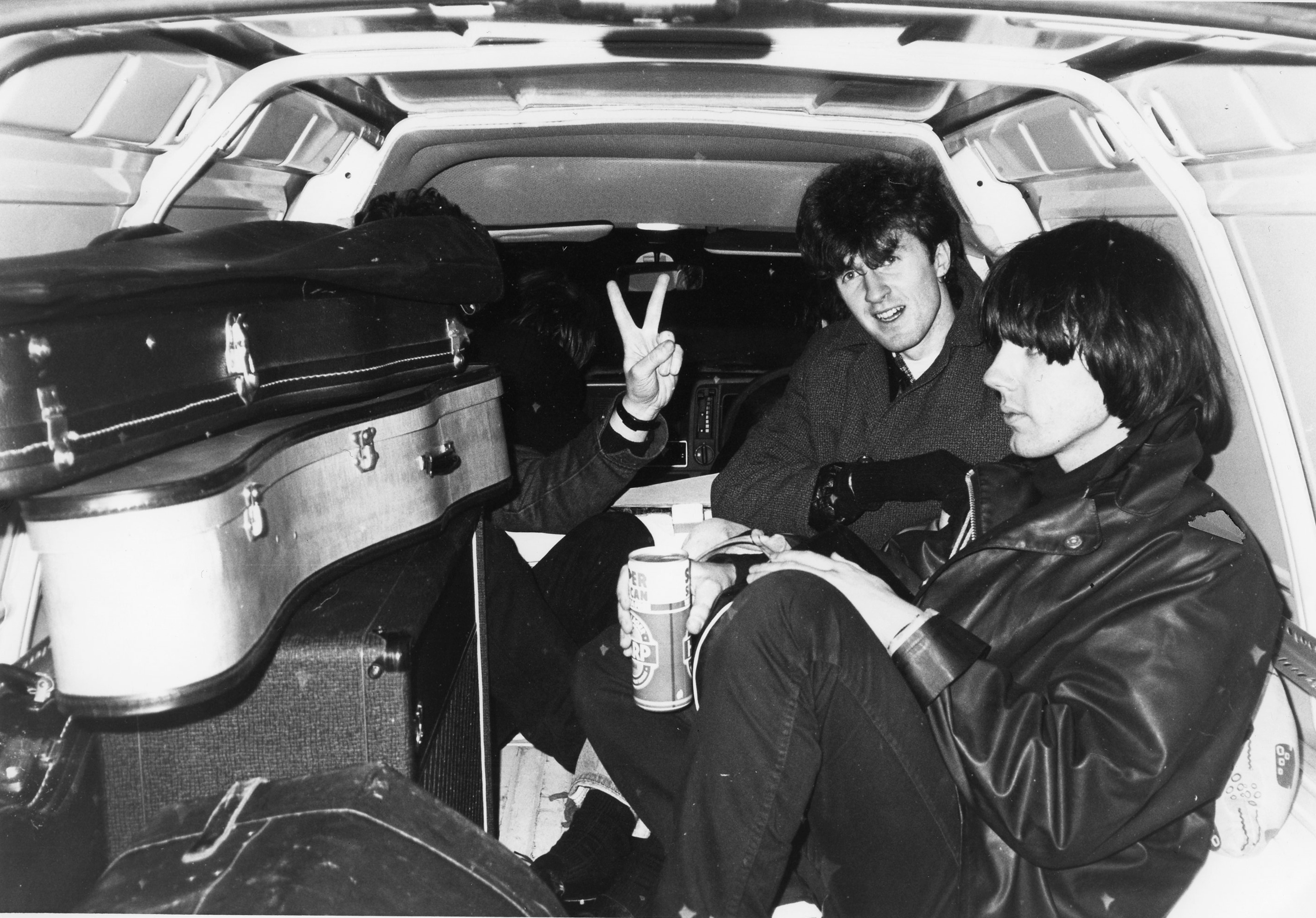
I remember when we supported The Go-Betweens, we did some other shows with them and they had a little splitter vehicle. And to us, that meant they were successful. Because our drummer, John Wills, worked in St Paul’s for a florist called Felton, we used to all get in the back of his little work’s van and drive around in that to gigs.
You know Adrian Borland produced Felt’s final album, ‘Me And A Monkey On The Moon?’ That kind of came about through me because I’d always kept in contact with him. He’d recently done some Apple Boutique demos and when we split soon afterwards, as nothing was happening, Lawrence then got John Mohan to play with Felt. When I gave Adrian The Servants demos, he was on Statik Records. They were doing a compilation album on a subsidiary label called Hybrid and they paid for us to go and record with him, an early version of ‘She’s Always Hiding’ and ‘Meredith.’ But then they gave us this contract which was just unbelievable. It was a five-album deal, no advance or anything. We didn’t sign it, so it never came out. Not long after the label folded. Adrian had also warned us that they were in financial difficulty.
When I joined Felt, I met Sarah Cracknell because she had put out a solo single at that point and had been going out with Lawrence. She used to come to the shows with her mum. A friend of mine, Tony Barber – he played in Denim and Buzzcocks – had a copy of the single. I remember years ago he sold it and there was a huge bidding war for it on eBay. He got hundreds of pounds for it.
But jumping forward, the last Servants gig was the Bay 63 show, where Lawrence famously took acid and told the audience to stop staring at him, get their money back and go home. Sarah Cracknell was in a band, with Mick Bund who played with David Westlake and with Felt after me and they were on the bill as well, alongside Felt and The Servants. They were called Oblivion River. The Go-Betweens were at that show too – and I wore a cowboy hat. Grant McLennan told me I looked like James Dean in ‘Giant.’
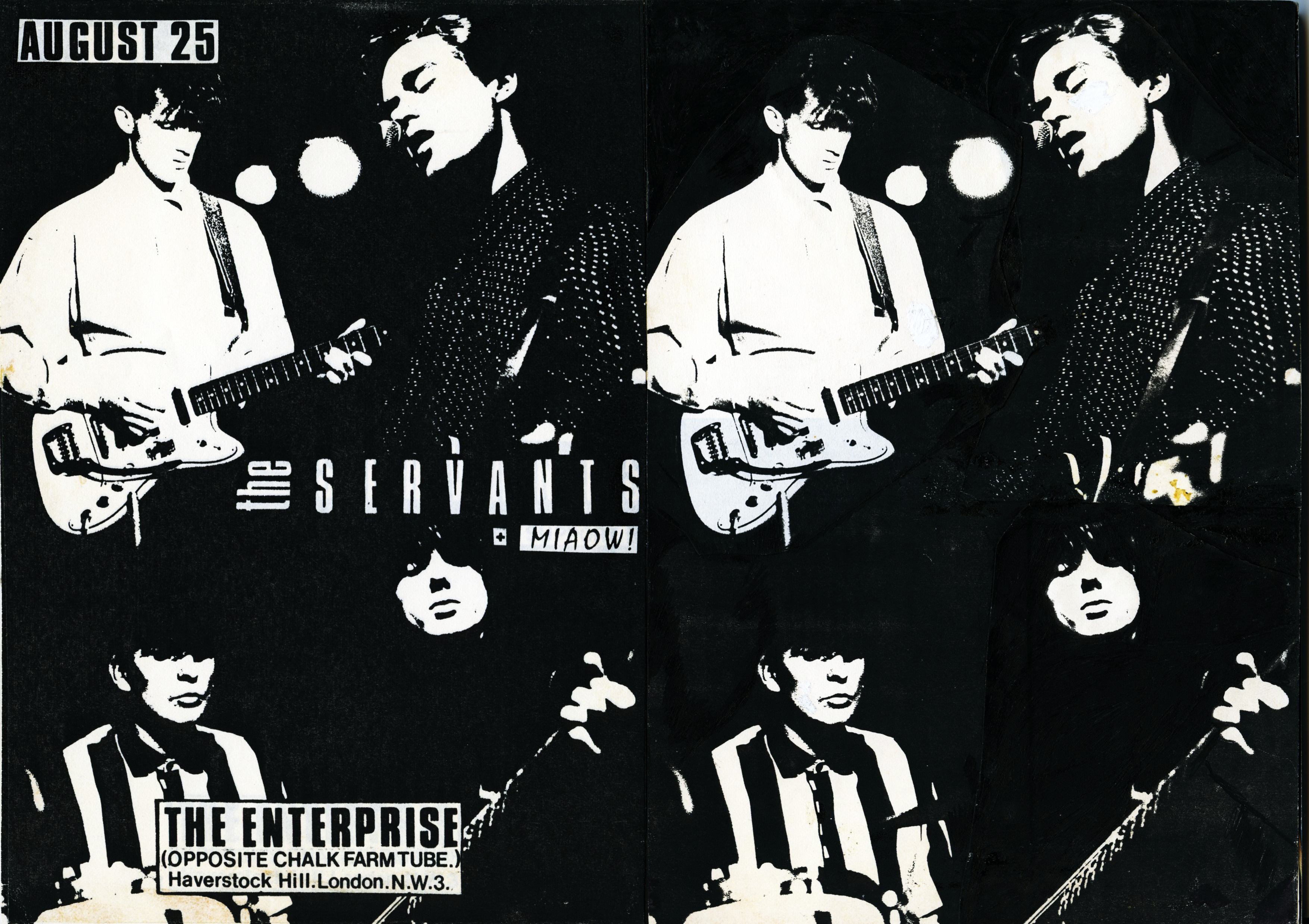
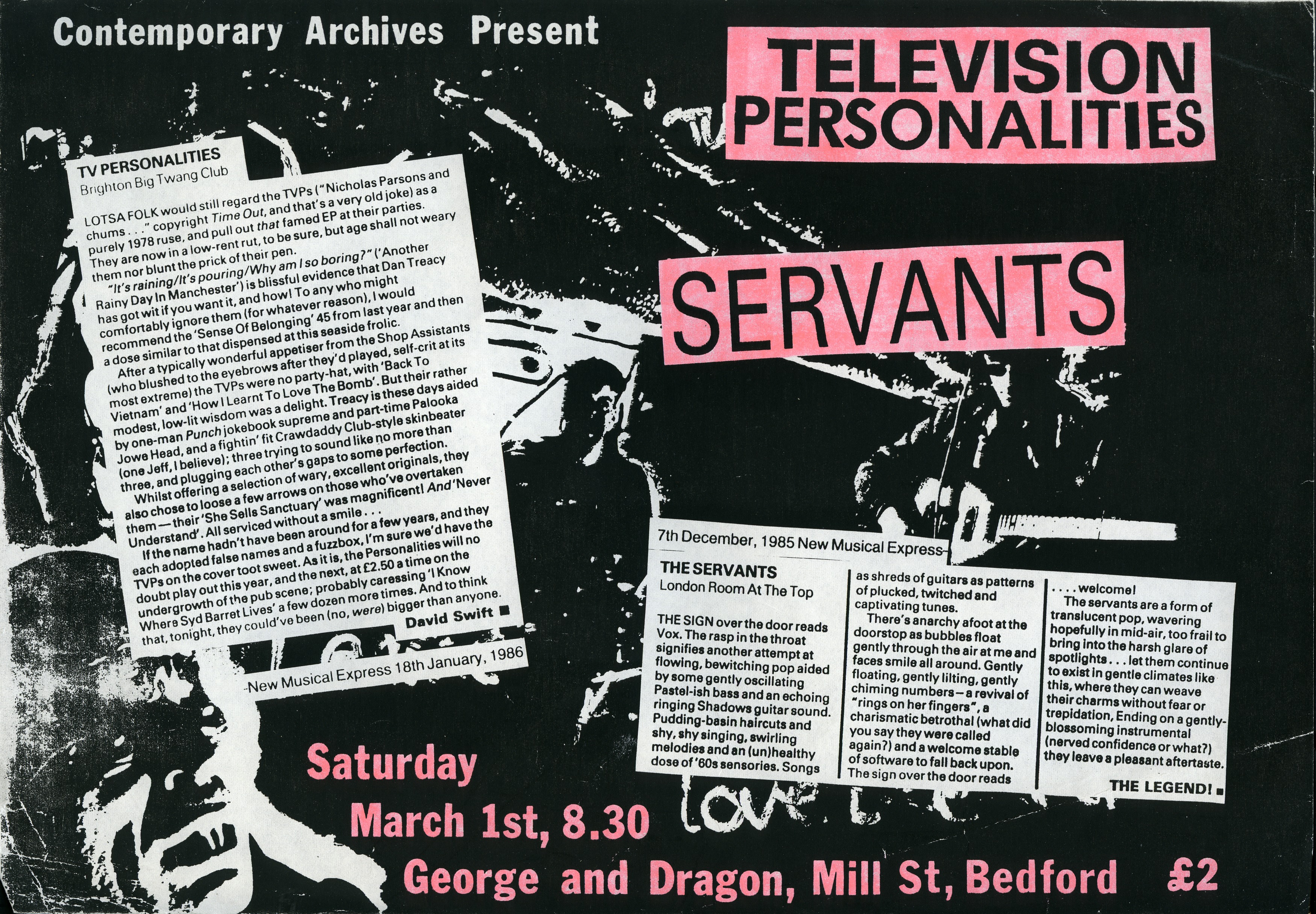
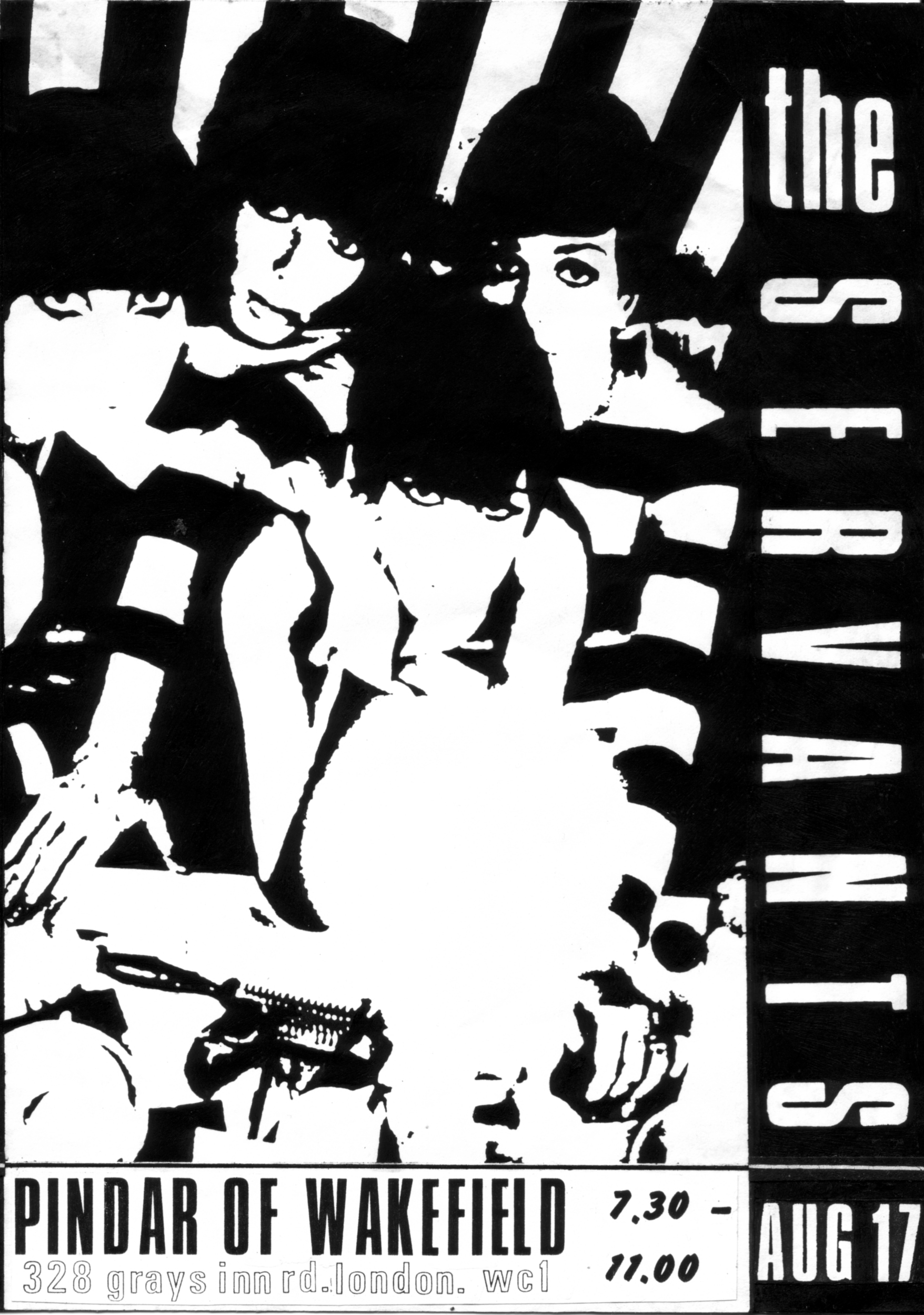
When I was in The Servants, we did about 25 shows in all. The first show was at the Pinder Of Wakefield, which is now the Water Rats in King’s Cross, supporting the Television Personalities. Then we did a gig at The Crown and Castle in Dalston and Jeff Barrett came along to that. At that point, he was doing press for Creation. He moved up to London and he was with Bill Prince, who had been in The Loft (Creation Records band fronted by Pete Astor) and they were starting this label, Head – so we went with them. The other person who was interested was Philip Hall, who was A&R-ing for Stiff at the time and managed The Manic Street Preachers later on. He was actually in the year above me at my school, Wimbledon College. He sadly died young. And through Jeff’s connection with Creation, we then started getting good gigs supporting their bands – Primal Scream, Felt, The Jesus and Mary Chain. And with The Go-Betweens, of course. So that helped a lot.
G : Were The Servants aiming to be on Creation at this point?
P : Well, that’s what split the band up, actually. By the time we recorded the second single, ‘The Sun, A Small Star,’ David fell out with Bill Prince. I don’t know if he fell out with Jeff but he decided that he wanted the single to come out on Creation and he saw Alan MGee, who said, “Yes, I’ll put it out.” But the rest of the band, we just thought, well, it’s not fair because of all the work Jeff’s done. Although I’d have loved to be on Creation. Also, Jeff Barrett said, “If you put this record out on Creation, I’m not working it. I’m not doing the press on it”.
So, the three of us made a stand. And David just said, right, I’m not doing any gigs. I’m not playing or doing anything. So, anyway, by the time the single came out, we’d split up but I think it still did pretty well. And then Lawrence asked me to play with Felt. So, I just thought, yeah, great.
G: And from what I’ve read, your hair had a big part in that?
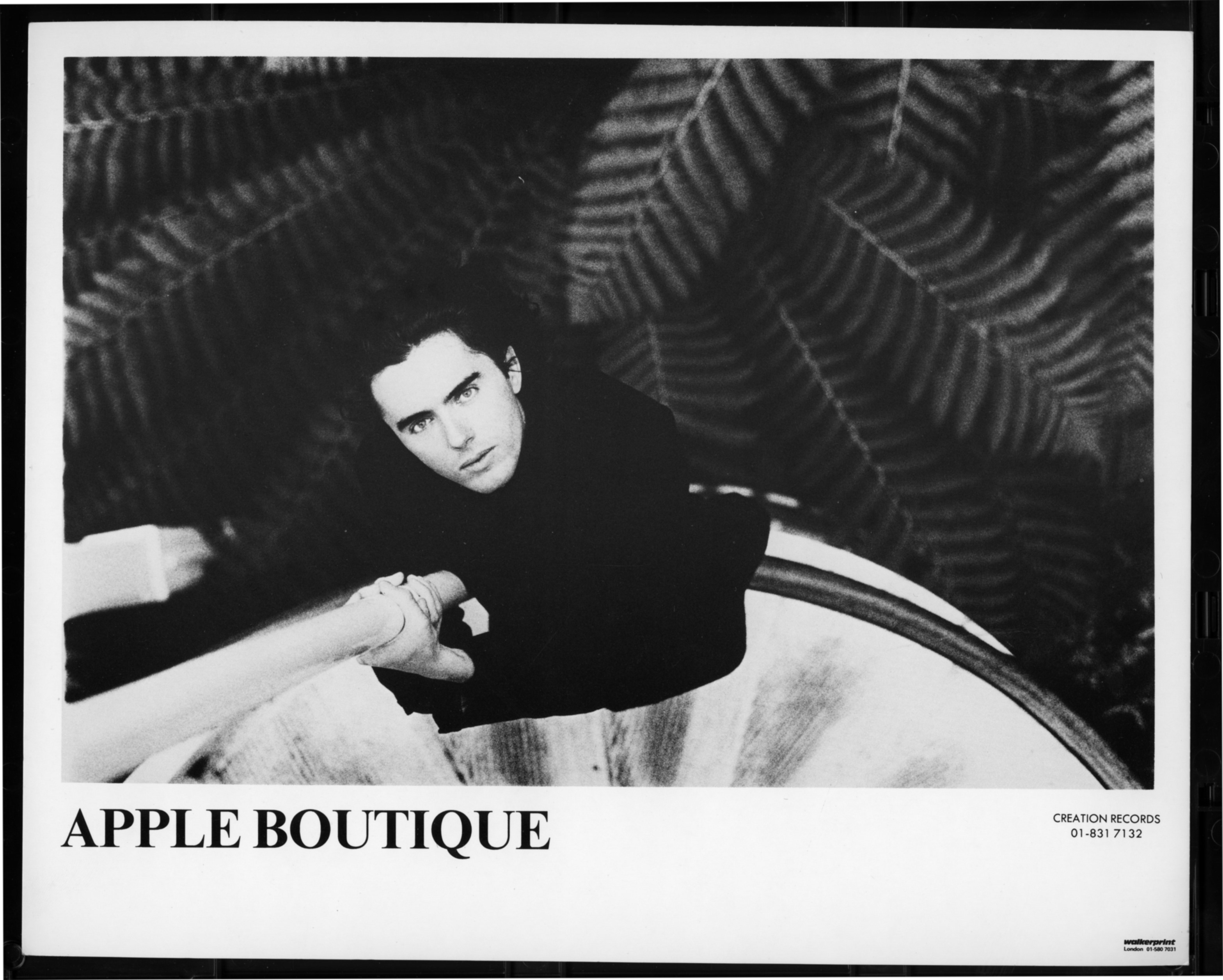
P : Yeah, Lawrence said I had great hair. I remember him asking to check out my hairline! Have you ever seen the Apple Boutique video? Joe Foster said it looked like an ad for Harmony hairspray!
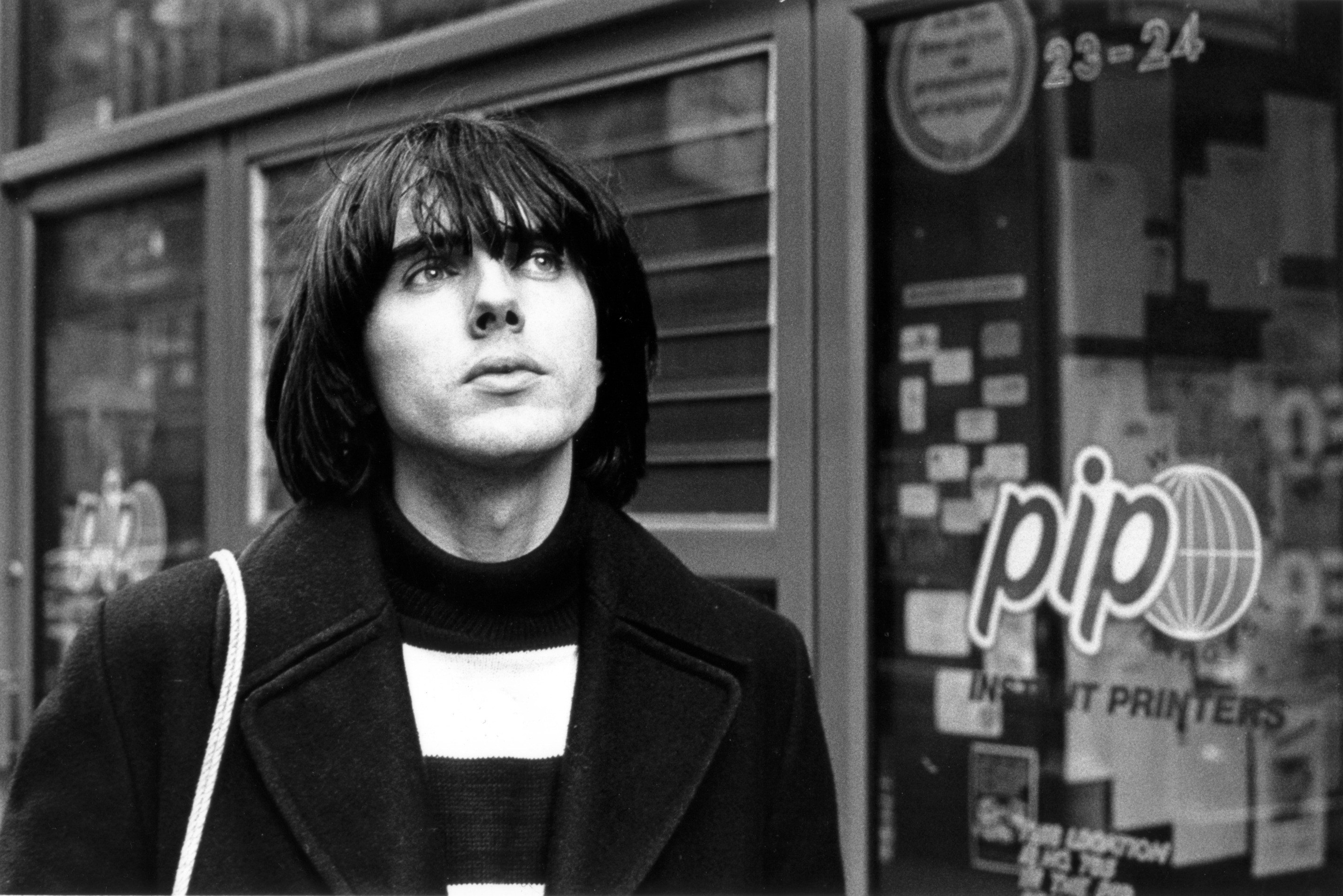
G : Hair was really important in the mid-‘80s.
P : This is also how I ended up in the Primal Scream video for ‘Gentle Tuesday’ too. I remember walking in to see them at the Boston Arms in Tufnell Park – and they were all staring at my hair! In about the space of two weeks, I did the Primal Scream video, played with Felt at Glastonbury and then I also recorded the Apple Boutique single. I recorded the Apple Boutique single because I had that Akai reel-to-reel – and recorded the demo on it. So, I wrote this song, ‘Love Resistance’ and I took the demo into the Creation office and they just played it on the answering machine. They liked it and said, “Yeah, great, we’ll book you in.” And at that point, they had a deal with Alaska Studios in Waterloo, so you’d get the weekend at Alaska to record songs, your single. The Jesus And Mary Chain did ‘Upside Down’ there. So, I did that. It took a while for it to come out, though. In fact, originally, I wanted to be called Pip and that’s what was written on the schedule on the wall at Creation – you know, short for Philip – an affectionate nickname for me – and it sounded like a ‘60s popstar name to me. But Alan didn’t like that, so it came out as Apple Boutique.
G: So, there’s obviously a Felt song called ‘Apple Boutique.’ Which came first, the band name or the song?
P : We were on tour in Germany and Lawrence had a song title but there wasn’t a song at that point. And Alan McGee said, “Well, why don’t you use Apple Boutique?” So, I went from a pip to an apple.
G : Just going back to Creation playing everything on their office answering machine, I read in Dave Cavanagh’s wonderful Creation Records book (‘The Creation Records Story : My Magpie Eyes Are Hungry For The Prize’) that if something wasn’t nailed down, they’d release it. Pat Fish (The Jazz Butcher) drops off a tape of guitar experiments, leaves it on the desk with a note about it being unreleasable, goes off to LA to work with Blue Aeroplanes. He gets back to discover that Creation have gone ahead and cut the vinyl.
P : Well, it’s a bit like Felt’s ‘Pictorial Jackson Review’ album. That was just demos they did with Joe Foster. Creation put it out but it wasn’t meant to be the finished recording. Or even ‘Train Above The City.’ Originally, they bought some vibes off this guy, Neil Scott, a guitarist who’d played on ‘Forever Breathes The Lonely Word.’ In fact, I shared a flat with him and bought my Jazzmaster from him. Anyway, they were going to do an album of Gary Ainge playing vibes but then Lawrence convinced Gary for it to come out as a Felt album. I still think it’s a great record.
G : And ‘Train Above The City’ had the working title of ‘Electric Trains?’
P : It’s funny you should say that because I remember about six months or a year before that came out, I was in the Camden Falcon and Robert Forster (The Go-Betweens) was there and he was going through his Sherlock Holmes phase of wearing a deerstalker and a long cape. And I remember mentioning to him that Lawrence was thinking of calling the new album, ‘Electric Trains.’ Then, when the next Go-Betweens album came out, there’s a line from Robert that mentions “the electric train of soft cylinder parts” (on ‘Spirit Of A Vampyre’). And I thought, oh, I wonder if that came from that? My favourite Go-Betweens line is an early one : “The best detective is a child detective….” (from ‘I Need Two Heads’).
G : A friend of mine once convinced me to accompany him to a Go-Betweens gig in 1989 at Nottingham Poly by reciting, “The rain hits the roof with the sound of a finished kiss, like a lip lifting from a lip…” (from ‘The Wrong Road’)
P : We supported The Go-Betweens in Nottingham at a venue called Zhivago’s and Lawrence came to that one. That was when I first met him. We went to the pub after the soundcheck and in the pub, they were playing music videos and they played the video for Diana Ross’ ‘Chain Reaction,’ which I’m in. And Lawrence was like, “Phil, you’re a star!”
G : How did you get in the video for ‘Chain Reaction?’ Did you meet Diana Ross?
P : My ex-girlfriend was a make-up artist on it. And my cousin who had been in Hot Gossip (omnipresent ’70’s/’80s British dance troupe) was in it too, dancing. Diana Ross was very nice, actually. I know she’s got a bad reputation but no, she was lovely.
G : Just going back to Apple Boutique, did you not enjoy fronting a band?
P : Well, I thought it’d be a lot easier than it was. The recording was perfect. It was quite light but then getting the band together wasn’t organic really. Apart from John (Mohan) and I, we had to find a bass player and a drummer and when we played live, it was a bit heavy handed, I thought. And also, there wasn’t particularly any interest in us and it was a bit depressing, to be honest with you. I wasn’t a very confident front person. The first gig I did was Felt at the LSE with The House Of Love. John Mohan played, Owen, the drummer who played on the single and Nick Roughley from Blow Up played bass. Robert Forster saw it and told me I needed to look at the audience more. Also, Alan McGee was kind of busy with Primal Scream, House Of Love, My Bloody Valentine. He wasn’t really interested. Although they did repress it in Spain because, bizarrely enough, ‘The Ballad Of Jet Harris’ became a chill-out song at a club in Valencia. There are horrible dance versions of it out there.
G : How did you end up working at NME magazine originally?
P : Through a friend, Julie Barber. In those days, you could sort of fall into jobs. And she was going to gigs and things. She met people from the NME and they needed someone to do some pictures. And she did that. And then she went away on holiday and I covered for her. But she didn’t come back. And I’d like to think I’ve got a quite encyclopaedic knowledge of music, as I read all the music papers, so I stayed on and ended up working there full time. It was great.
G : As a picture researcher?
P : I also did things like helping out with the gig guide. We did that initially by writing every gig on a sheet of A4 paper and then we’d collate it. Still today, when I hear a town name in the UK, I think of the venue – most likely defunct now, sadly. The gig guide was actually the most popular thing in the NME and we were the first to get computers. We did the Indie Charts too. Quite often record shops were very busy so we would compile it from only a few shops. One of the Stone Roses rang up once and wanted to know why they weren’t in it, as they were “fooking huge in Manchester!”
G : Do you ever write for NME?
P : Towards the end I did write a few live and album reviews but it was quite difficult writing about music when you’ve been a musician as well. I tried to be honest and in retrospect, maybe I shouldn’t have been as honest. I remember there was a Lilac Time record. I gave the album a really good review – which was used in their ad – and then I went to the gig and I made some comment about where I was sitting in the guest seats, there weren’t many people there. And then I remember I bumped into Stephen Duffy and he said, “I suppose you thought that was funny?” And at the next London gig they played, I didn’t actually go – my friend went instead and Duffy called me out from the stage. I did enjoy writing but you had to be careful, really because you’re torn between wanting to be honest or being diplomatic.
G : You know, I think the other thing is when you’re a musician and you’re writing about other people’s records, you’re actually thinking of ways they could be improved upon. So, personally, I find that it’s very difficult to just sit down and enjoy music.
P : I think the worst thing is, especially with music, I find, is sometimes when you’re in two minds about something – you don’t dislike it and then you’re dragged to gigs. I remember being taken to see 10,000 Maniacs at Sadler’s Wells Theatre. I didn’t mind them either way but the singer, Natalie Merchant, was skipping around the stage like she was a child (grimaces).
Or being dragged to see Simple Minds in the ‘80s at Hammersmith Odeon and I just hated it. Whereas, before that, I didn’t really care either way about them. It’s very personal. I find I’m much more open minded with films. I read Sight And Sound magazine because I don’t know as much about film and I can always find out new things, interesting things and I read it from cover to cover.
G : The role of music magazines and the trust in them has changed irrevocably. In the ‘70s and ‘80s, you’d trust a journalist’s opinion and if they gave a record a bad review, you’d be put off buying it. And if something got a 10-out-of-10 review, you’d rush out and get it.
P : Well, I think also now it’s changed really because in the ’80s and ’90s the circulation was so much bigger than now, they had much more power.
G : I think it used to be very cruel. And it’s not so cruel now. It’s like they’ve learned their lesson because circulation is way down and they know who pays the fiddler.
P : Working at the NME was a bit like working in an office full of singers. Big personalities. It was quite scary but it was good though and exciting. You never knew from week to week what was going to happen.
G : I have to ask you about Biff Bang Pow! They’re one of my favourite bands but they never got their dues, perhaps because they were never big enough to justify a reformation and anyway, I would suppose Alan McGee made his millions from Oasis. I’ve never been able to join up Alan McGee as a person and an enigma with that person who sings on Biff Bang Pow! albums because the records are, well, quite sensitive.
P : I know and it’s funny because there’s that quote about him talking about Coldplay and calling them indie bedwetters and I was just thinking, hmm, you know…
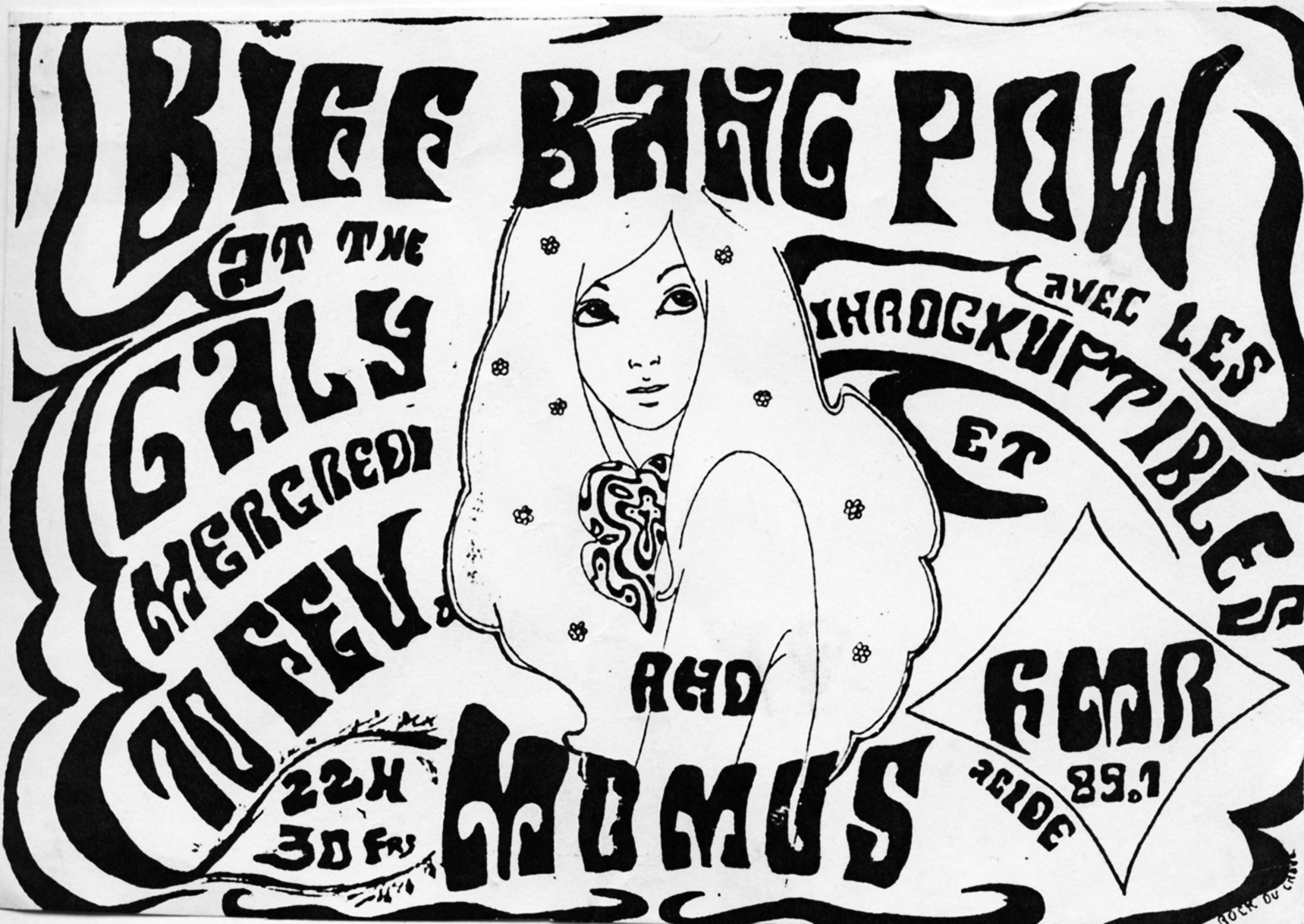
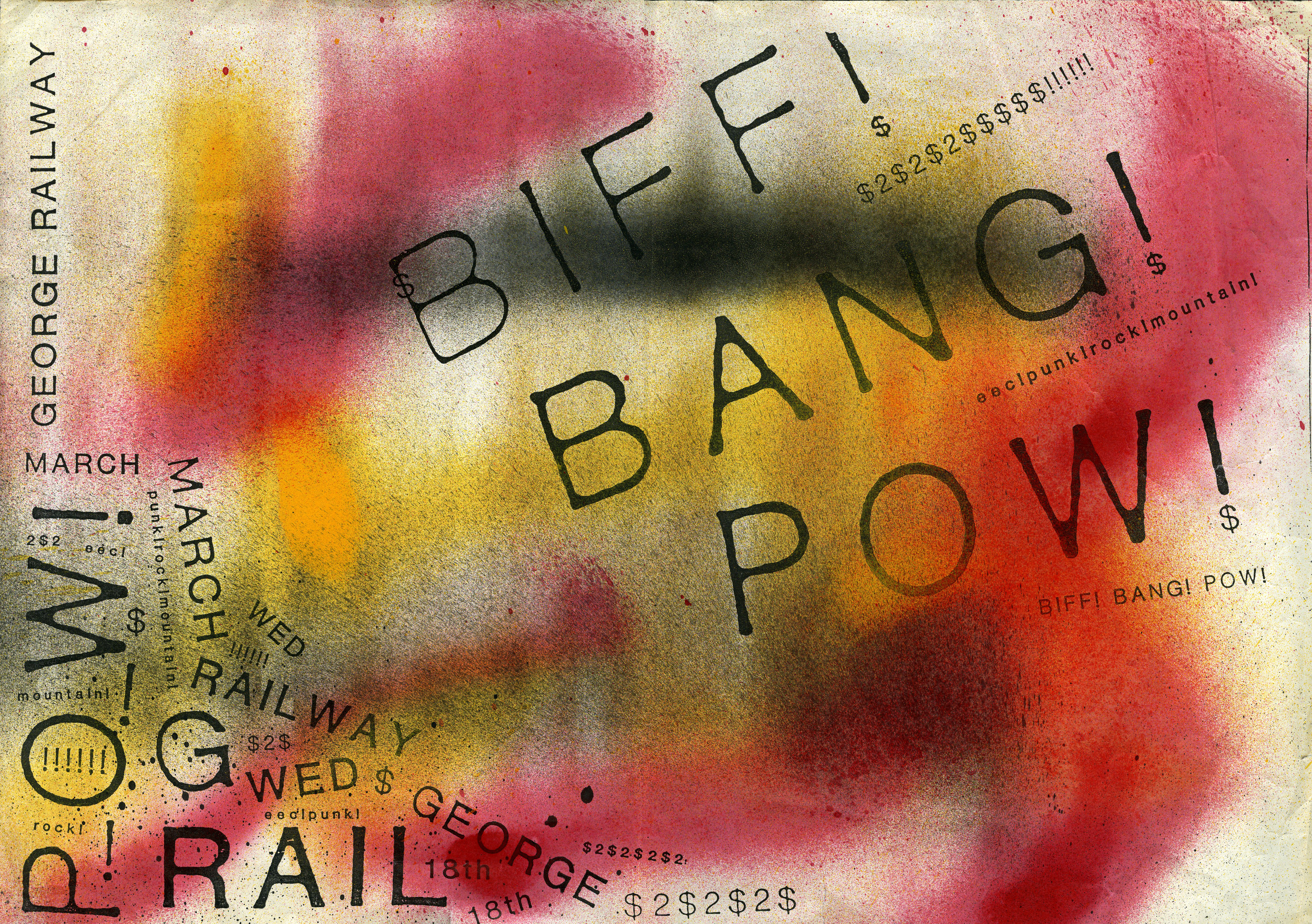
But I guess for Alan and Dick (Green), they had the record label, so the band was just kind of their hobby. I do remember we toured, the start of ‘89, we had a disastrous French tour : Biff Bang Pow! and Momus. And after about a week of it, Dick and Alan were like, “Let’s just forget about this and go back home.” House Of Love was starting to happen. We were playing little coffee bars and things, sleeping on floors and they must have just thought, “Stop mucking about with this. We should be back doing Creation.”
G : Do you remember recording the Biff Bang Pow! album, ‘Love Is Forever?’
P : I do. We recorded at Greenhouse Studios in Old Street. Actually, quite a few of the songs are acoustic, so I didn’t play on that many songs.
G : But you co-wrote the track, ‘Dark In Mind?’
P : Yeah, I did. Well, it’s just a jam, basically.
G : And you’re living off the royalties from that?
P : Yeah (laughs). I never saw any royalties from Apple Boutique either but I was just happy to have a single out, you know – and I did get the rights to the recordings back in the end. It was just great that Alan wanted to do it. I loved his enthusiasm.
G : So, you were also in Hangman’s Beautiful Daughters. For anyone who doesn’t already know, what was the Dan Treacy (Television Personalities) connection with that?
P : Well, Dan was going out with Emily, who was the singer. They lived together and they both put on The Room At The Top, which was a night above The Enterprise pub in Chalk Farm. The Servants played it, The Mighty Lemon Drops, June Brides, lots of C86 bands. It was great. Dan lived down in Clapham South and he had a label, Dreamworld. And I was going out with Sandy, who was the guitarist in the band. She was a photographer as well. She did the photos for Felt’s ‘Poem Of The River’ album.
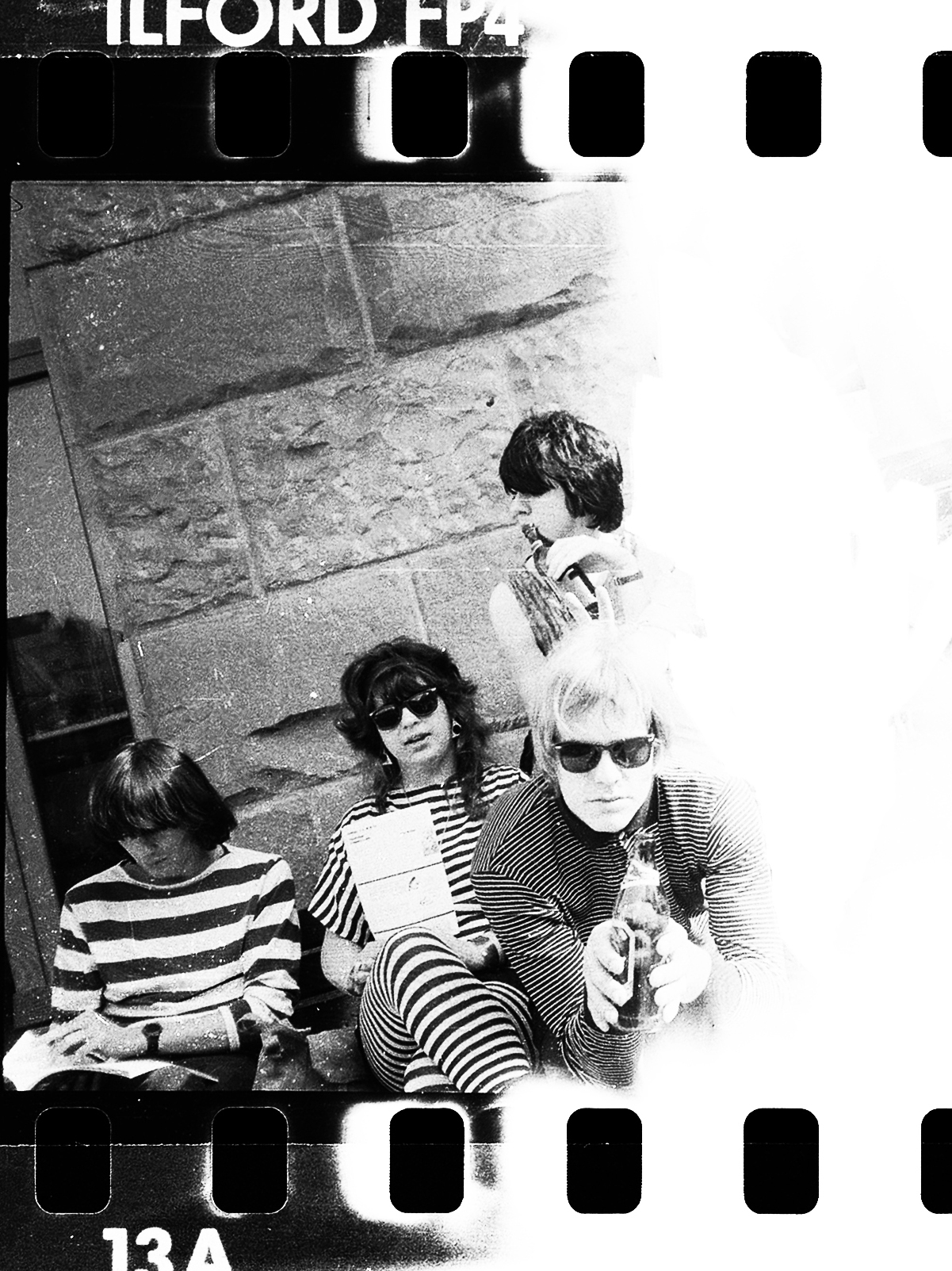
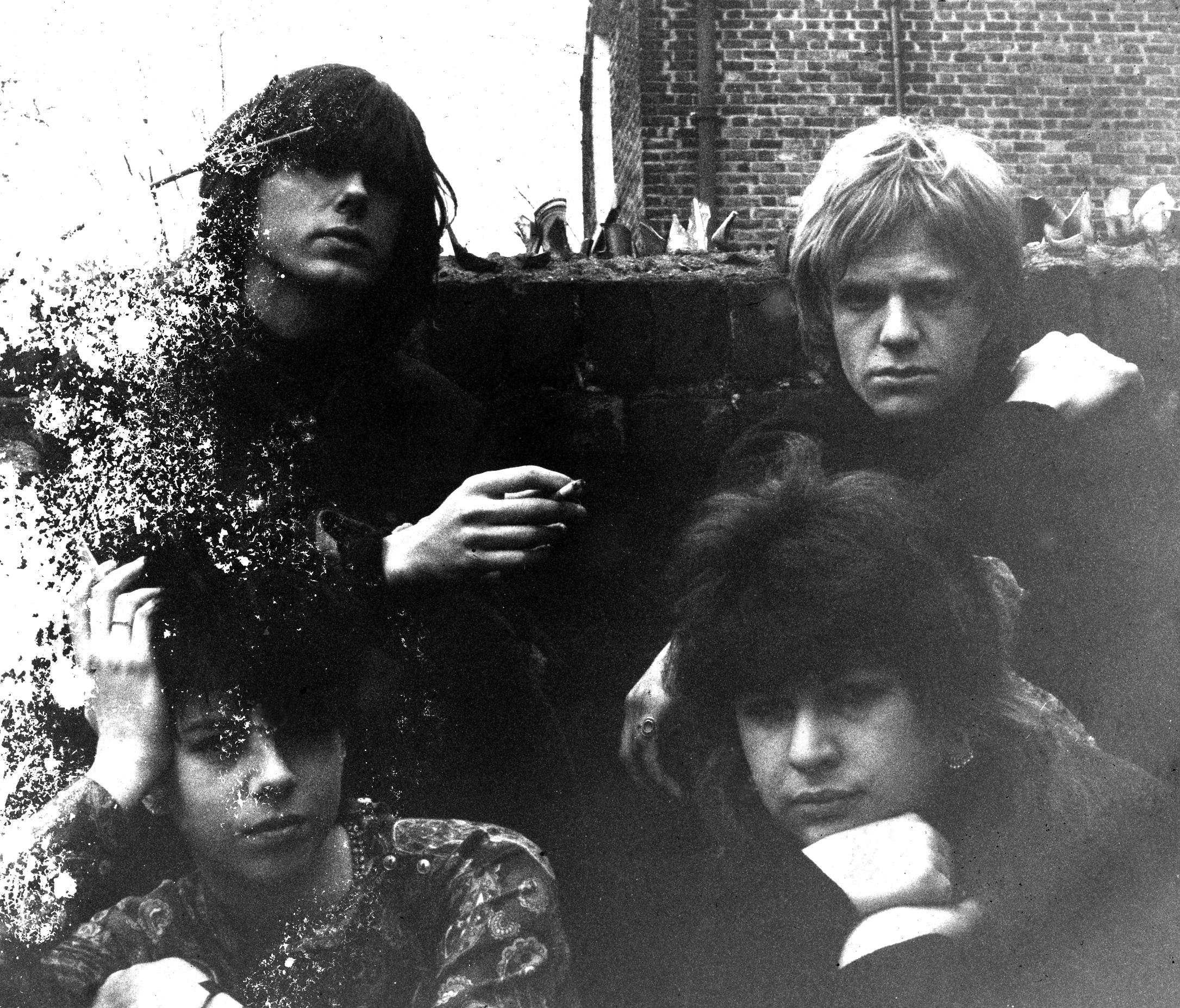
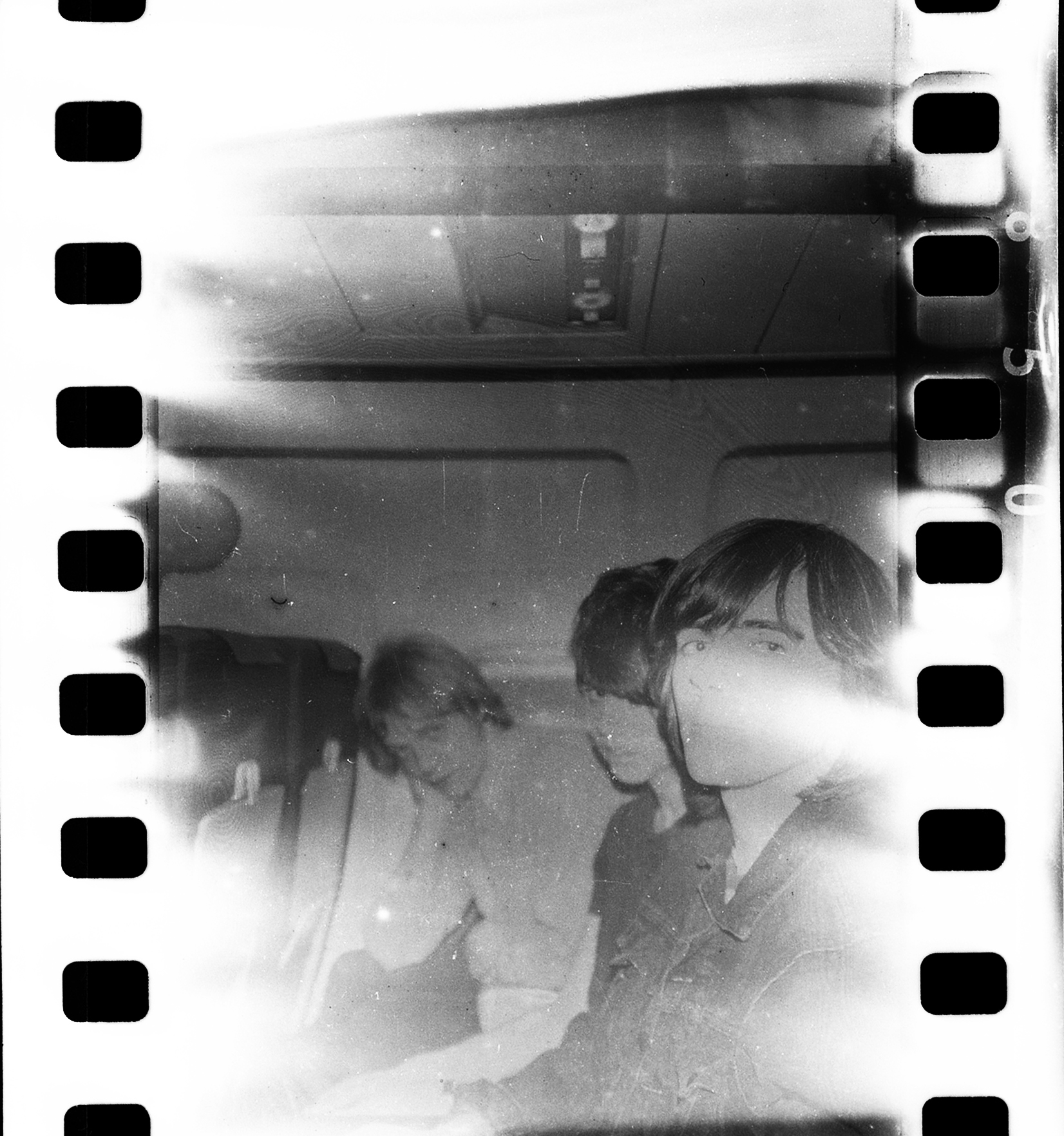
Anyway, their bass player had left. He actually joined another good band that was on Dreamworld, called The Looking Glass, who were produced by Bid. So, I sort of stepped in to help. We did a European tour supporting TVPs. We put a mini album out, of course because mini-albums were all the rage. Then we did the single, ‘Love Is Blue’ and we did a second mini album. Some of the earlier songs were written by Dan.
G: Why did that come to a halt?
P : For me it was just a bit of fun and I stopped enjoying it, so I thought I’d get out and focus on Apple Boutique.
G: The Felt influence sounds very clear to me on the recordings you’ve played on.
P : Yeah, definitely. I mean, if I did a compilation of stuff that I played on, there’s definitely a melodic, jangly theme. I lived in Marylebone for fifteen years and then I moved to Highgate to what I called “the home for retiring indie folk.” It was basically a house broken up into bedsits – it was the end of that era, really. Coins in the meter, etc. Do you know Dickon Edwards? He’s kept this long-running diary online and there’s a bit in it about me moving in : “Mr Jangle Pop has moved in next door.” So yeah, there’s definitely a kind of jangly thing going on, you know, even Lush songs like ‘Lit Up.’
G : ‘Desire Lines’ is very Felt to my ears.
P : It’s funny, I remember Lawrence saying, when he moved into his flat here in Whitecross Street, he had someone around decorating and they had the radio on – BBC 6 Music. He said, “Phil, they played this record. I thought it was brilliant. And at the end they said it was ‘Desire Lines’ by Lush!”
G : I actually think there’s a Felt-ish thing going on in The Servants, on some tracks.
P : Oh, definitely. Yeah. Well, when I heard John Mohan’s guitar playing, I thought, wow, it’s kind of Maurice Deebank and he didn’t know who Maurice Deebank was at that point. Apple Boutique, of course, has got a bit of a Felt/Go-Betweens thing going on, especially ‘The Ballad Of Jet Harris.’
G : Let’s talk about Lush. I guess everyone knows the story that Lush originally had a bass player, Steve Rippon, who left in 1991?
P : When you’re in a band, especially when you’re busy in a band, it’s 24/7 – you’ve got to be available all the time. And I guess one of the things about Lush was, musically, Miki and Emma would write the songs on their Portastudios, so all the parts were written – the bass parts you’re playing, you hadn’t written, so you didn’t feel as involved, as close to them. And I think with Steve, his girlfriend, who later became his wife, was a schoolteacher, so it was very difficult for him to go on holiday at the same time as her. And I think what happened in the end, he said he was going to go on holiday and I don’t know if they had hadn’t heard it properly but they were in the studio and they were wondering where he was. I think he’d just had enough really.
G : But Lush were already rather popular when you joined, weren’t they?
P : Oh, God, yeah. When I joined them, they’d already played like one hundred and fifty shows. They’d been to America a couple of times. I remember when I went to America with them – I’d been to America once on a holiday but I’d never been with a band – and it was a bit like David Essex in ‘Stardust.’ I remember being at JFK airport and we were waiting for the limo to pick us up and they were like, “Well, where’s the limo?” You know, like it was usual.Then we’re in the limo going into Manhattan and I’m looking out the window thinking , “Wow, this is amazing!”
We did a thirty-two-date tour of the UK and we had Eat To The Beat catering and the ‘Spooky’ album came out, got in the charts for a couple of weeks. We had a proper video, made by Winona Ryder’s cousin. The biggest band I’d been up until that point had been Felt and we never had any money. You know, we were lucky when we went to Europe and it’s like, “Oh my God, we’ve got a rider!” You weren’t used to that. In Felt, you could stay in a hotel or sometimes or you’d share a double bed with Lawrence or whatever, you know, a bit Morecambe and Wise – or as Lawrence said in a Christmas NME, that sleeping next to me was like sleeping with Richard O’ Sullivan! So yeah, to me, Lush was the big time.
But then two years on – it shows you how fickle the music industry is and the music press is – when ‘Split’ came out, everything had moved on. Shoegazing was dead and grunge was happening. Britpop was starting to happen. Our British tour was suddenly, five dates and even some of those weren’t sold out. But the good thing with Lush is that because we were signed to Warners in America, we could always go to America and tour. But we had to basically borrow money every time we toured there. You’d have to borrow like thirty thousand dollars because you had a tour bus, a crew, hotels, etc. We had these amazing lights which are probably two-a-penny now but they cost a grand a week or something ridiculous back then. So, we could always go back to America and play clubs and small theatres and things.
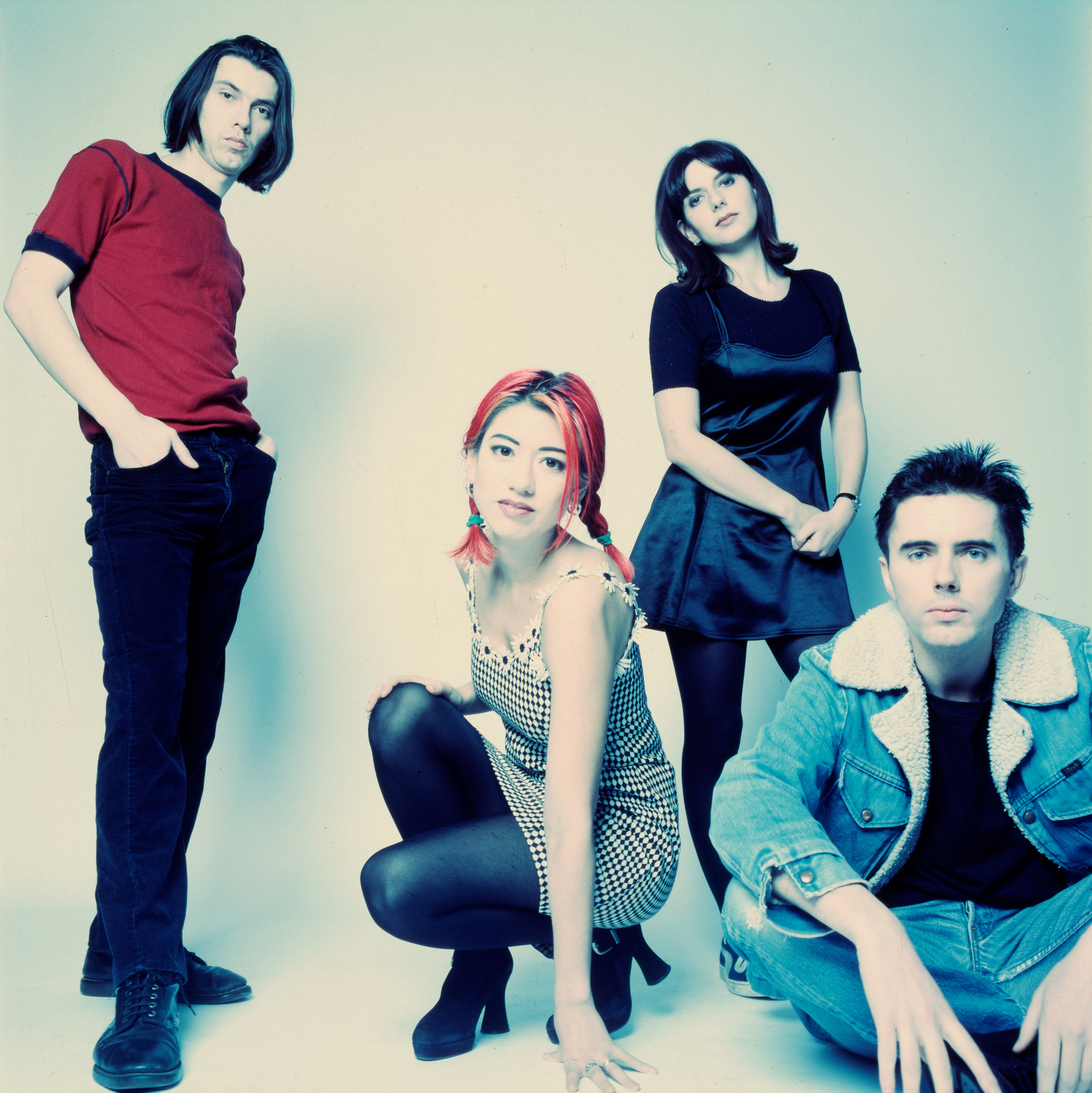
G : There’s this much-cited thing that Lush changed their sound to adapt to the time – specifically to Britpop becoming massive? And “shoegaze” was still a derogatory term at that point, wasn’t it?
P : When ‘Split’ came out, there wasn’t much enthusiasm for it but now it’s considered to be the best Lush album and people do like it a lot. But we did jump on the Britpop bandwagon, I think. We wanted to replicate our live sound more. And it did take away some of the mystery, musically. It did make us more successful – but it was a poisoned chalice – as suddenly, we were in this awful world of light entertainment. Lush went from being on a rarefied label like 4AD, doing the Vaughan Oliver exhibition in France, to doing Richard and Judy! Or doing ‘All Rise For Julian Clary’ and the Radio 1 Roadshow in Hunstanton, with Simon Mayo in a fat suit, dancing at the side of the stage, to an audience of mums with their kids in push chairs – all in one day. The sort of groups I liked were Television or Wire, the cool bands, great music and suddenly you’re in this ridiculous world of light entertainment.
G : I watched an interview with Jarvis Cocker recently and he was saying how he doesn’t use the ‘B-word’ – ie, Britpop because he didn’t feel part of that, they were just sort of hoovered into it by the press.
P : It was a kind of reaction against grunge, wasn’t it? And Denim and Pulp were kind of the first groups to start referencing the ‘70s. Before that the ‘70s were seen as quite naff. But there’s that twenty-year rule, isn’t there? In the ‘80s we were into the ‘60s and now you think, oh God, 1986 was only ten years since punk.
I remember when I was twelve, in 1972, it just seemed no-one was interested in The Beatles anymore. It was definitely like the ‘All The Young Dudes’ lyric. “Brother’s back at home with his Beatles & Stones.” Everything was forward thinking. It wasn’t until the ‘80s, maybe because music became so terrible that you started looking back. I remember around the time of Joy Division people would go, “Joy Division? Sounds a bit like The Doors.” Or Wire’s ‘154’ is a bit Syd Barrett and so you’d listen to that.
G : Well, I think that Jesus and Mary Chain were almost singularly responsible for my peers checking out the Velvet Underground in 1985.
P : I’d heard of The Velvet Underground by then because, David Bowie mentioned The Velvet Underground and The Stooges, etc. I remember buying the best of them (VU) and going home and putting it on because I was used to hearing the Velvet Underground songs on ‘Rock ‘n’ Roll Animal’. And when I put on ‘Sunday Morning,’ I was like, “It’s like the bloody Monkees!” And I liked The Monkees.
But I guess that Lush thing was, you know, answered prayers – be careful what you wish for. Because we were on 4AD, we didn’t have major label leverage, so although we got into the twenties or whatever, we were never in the top ten. We did Top Of The Pops a couple of times though.
G : When I was about 21, I came down to London to interview Ivo Watts-Russell (founder and head of 4AD at that time) and he said he was looking at signing a couple of British bands. In retrospect, I think he was talking about Lush and Pale Saints.
P : There’s the story that Lush played at The Camden Falcon with Pale Saints but Lush weren’t very good, live, back then, so he didn’t sign them. The irony is that the plugger at 4AD was Howard Gough, who became Lush’s manager and he was the one who was saying Lush were rubbish. I found it quite perverse that he ended up as their manager.
Around 1996, we were starting to have hits here in the UK, at the lower end of the chart but in America, the interest was waning because we weren’t that successful on college radio any longer – and they were trying to break us into a more mainstream audience – which was never going to happen there. Stereolab and groups like that were coming through.
G : What are your best memories of playing in Lush?
P : Definitely going to America – till towards the end. And it was always exciting to go to Japan.
G : And the camaraderie between you all was generally good until it wasn’t good?
P : I think Miki would even say this herself, that her book is her view and her opinions and of course, if someone else wrote a book about Lush, it’d be different. But Emma and I do share similar recollections of that time. The narrative now, because of Miki’s book and the interviews around it, is that her and Emma were at each other’s throats but I don’t remember it like that. It would flare up maybe once an album but it’s like when you’re working in an office with someone every day, things sometimes get heated but it’s very minor. And you have to remember we were together 24/7. Perhaps it’s like the Jim and William Reid thing where, because they’re family, only they pick up on the little signals, signals to which only they are sensitive to?
But considering we spent all that time together stuck on tour buses, especially when we went to America, we were worked hard. We’d turn up in a city on a nice tour bus, the local rep would meet us, we’d do college radio, we’d do in-stores, we’d do meet-and-greets, press interviews, meet fans, do the gig – we did everything. And then people came back afterwards. I’m naturally quite a shy person and sometimes I’d just have to escape to the tour bus because otherwise, I’d literally just go sort of numb. I felt like I wasn’t there sometimes. You know, when you’ve got people in your face all the time, it’s just overwhelming.
G : Can I ask you what your memories of Chris Acland are?
P : He was like the happy go lucky joker. And I think that’s why we’d all agree that’s one of the reasons the reunion didn’t work – because he lightened the load and he was the glue that kept it together, really. It’s interesting because around the time of ‘Split,’ ironically, he wanted to leave. I only found out during an NME interview we did together. Funnily enough, I was thinking of leaving as well. And Emma was thinking of leaving, too, I later found out. But Chris was convinced to stay. He got on well with the manager, Howard Gough, who got sacked eventually because he was a kind of fair-weather manager, really. When it stopped going well, he lost interest. And then he started his own record label, Laurel, and signed Menswear. He was offered Pulp when they were supporting us and he wasn’t interested because he was all just about America. “Got to make it big in America!” I mean, Lush were never going to be big in America.
But that last year, Chris hit thirty and he just wasn’t enjoying it as much, he wasn’t happy. But it’s like that thing with Ian Curtis where, only in retrospect can you say, “Oh…” A band’s meant to be a group but for survival instinct, you feel like you’re all on your own separate islands, really trying to survive – and you don’t notice the warning signs till it is all too late and it’s all gone tragically wrong.
What happened was, because of our new management, they were trying to get us up to “the next level” and so they put us on tour in America with The Goo Goo Dolls and The Gin Blossoms and we were playing these places as the support act and there’d be couples down the front with popcorn, like they were at the cinema. It just wasn’t right. In New York, we ended up playing the same size venue that we had headlined only a couple of months before. And our audience couldn’t get into it. It just wasn’t going anywhere, really.
We got back to London and we were meant to be going back on another American tour, for the third time, talking about playing bowling alleys. And Chris just got depressed, to the point that he couldn’t play and he said, “I can’t do this.” We had a European tour coming up and there was talk of getting another drummer. And I called Chris to get his thoughts on it – and his dad answered the phone. I said, “Can I speak to Chris?” and he said, “No, no you can’t.” They’d basically just found him.
The thing about suicide is it’s a bit like a murder mystery – but you know who did it – but you’re still always trying to find clues. He did start on Prozac around that time and there were these stories about people who start taking Prozac having a bad reaction to it? So, I don’t know.
G : As someone with a front row seat, I concur that the Britpop years weren’t devoid of darkness. Behind the chirpy façade, there was a lot of pressure to justify massive expenditure – perhaps the last time labels appeared to have a bottomless purse?
P : I remember we had to go to America and do a video for ‘Ladykillers.’ It cost fifty grand. There’s that quote from John Lennon about feeling like extras in their own films. Chris and I certainly felt like that in that video. I remember chatting to a girl extra, who I recognised from the ‘Wonderwall’ video and she asked me what other videos I had worked on. She thought I was a fellow extra too!
G : When I worked there, I remember Pulp coming into the Rough Trade office with the video for ‘This Is Hardcore’ – a fantastic video but it cost an absolute fortune.
P : Funnily enough, around that time, I ended up becoming an extra in films and I’m one of the few people that turned down Stanley Kubrick. I’m joking a little but I was meant to be an extra in ‘Eyes Wide Shut.’
Glen : Wow!
P : I was meant to be a naked waiter at an orgy. It was filmed at Twickenham Studio, the same studio where they filmed the ‘This Is Hardcore’ video. So, just imagine me being there naked, saying, “Hello, Jarvis!”
I remember Lush had to do a video for ‘Hypocrite,’ which in the end, we hired out a funfair for the day up near Heathrow Airport. We had lunch with the French director who worked with Björk, Michel Gondry. He wanted us to be in this haunted house and we’d be floating around. But we’d have to swim in a glass sided swimming pool and the only swimming pool like that there was at Universal Studios in Hollywood. When we asked how much that was going to cost, Gondry’s manager replied, “one hundred thousand”. We asked whether it was dollars or pounds and it was pounds. I think, in the end, PJ Harvey did it.
P : As an extra, I was meant to be hung, drawn and quartered in ‘Elizabeth.’ I turned that down because they wanted to cut my hair off and only pay me 200 quid. It ended up being right at the start of the film; looked pretty gruesome, too. And they wanted me to be one of a group of jesters in ‘Shakespeare In Love’ but I wouldn’t do it.
G : So, was the extra work happening between the end of Lush and the Lush reformation (in 2015)?
P : Yeah but I ended up going back to picture editing at the NME and then Uncut. I remember spending one day at Elstree Studios – on the Albert R Broccoli soundstage for a film called ‘Still Crazy’ – about a ‘70s rock band reforming. Bill Nighy, Bruce Robinson, Timothy Spall, Stephen Rea and Bruce Robinson were in it. I was meant to be a rock photographer. I was freezing in ‘70s bri-nylon, watching some poor old extras trying to keep a wall of Marshalls from being knocked down by some huge wind machines – it was meant to be during a storm at a festival. When I got home, I had a call saying, “Did I want to come into the nice warm office at the NME and work there doing the Gig Guide the next day?” So, I jumped at the chance. I also worked with Miki for a while in TV listings in IPC in King’s Reach Tower, where the NME, Melody Maker and Uncut also were. But that was like the less successful follow up to a successful TV series. Like going from ‘On The Buses’ to ‘Don’t Drink The Water.’ And it was like a sitcom in itself because it was full of resting thespians, TV presenters, poets and music journalists. There was even somebody from ‘Hi-de-hi!’ who worked there.
G : Why did Lush reform?
P : Um, it’s been ten long years now – so best not to open that can of worms again. All I will say is that I didn’t pick up a guitar for a few years after that. Couldn’t even look at it – and even got branded a ‘traitor’ on a Lush fan Facebook page, for leaving the group. I should get a t-shirt made with ‘Indie Traitor’ written on it.
G : So, were you kind of resigned to not being in a band again?
P : Yeah but then I met this British friend of mine, Jules Hayr, who lives in Porto and does merch for bands. He knew these musicians. He said, “Oh, they’ve got their own space. Why don’t you come along and play?” And that’s how I got back into it, really.
G : Is this Population 5?
P : Yeah. But it was just fun really, no pressure. We’d get good gigs and released an album. And then I did this West 11 thing with Beth Hirsch who sang for Air on ‘Moon Safari’ – and did an album too (‘Atlantic Coast Highway’ 2024).
G : And to come round to what you’re doing now, the main thing, the Feel thing, what was the starting point of that?
P : I remember mentioning it to Lawrence ten years ago or so and he wasn’t anti it. I think he must see that it helps sell the back catalogue. I mean, I’ve seen that Cherry Red are re-promoting the Felt albums recently, probably because of it. And you know, we’re doing it honourably, with love and it’s not like we’re going to make much money. It’s not about the money. As long as we can enjoy it, playing the music and the fans are enjoying it, that’s all that matters.
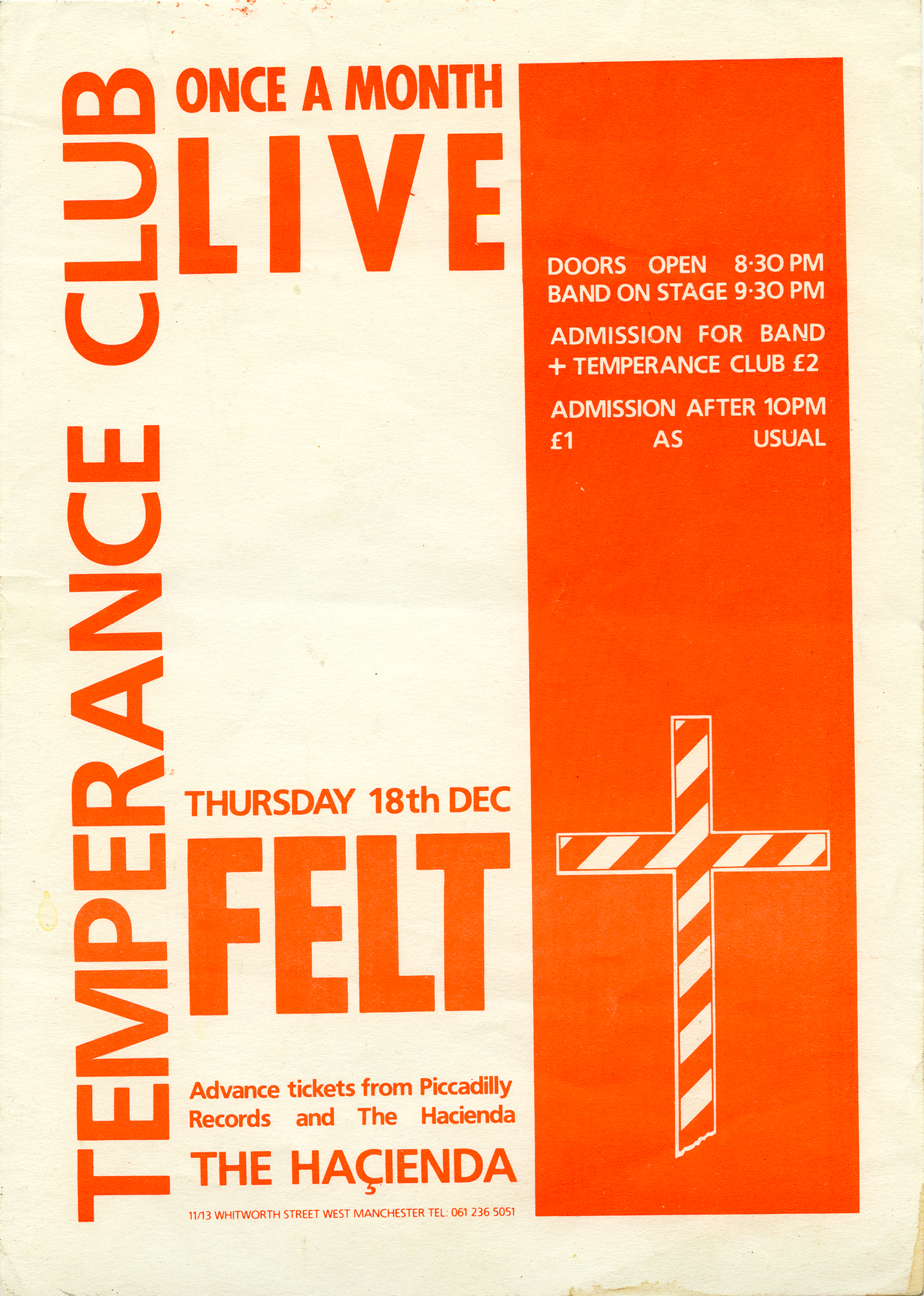
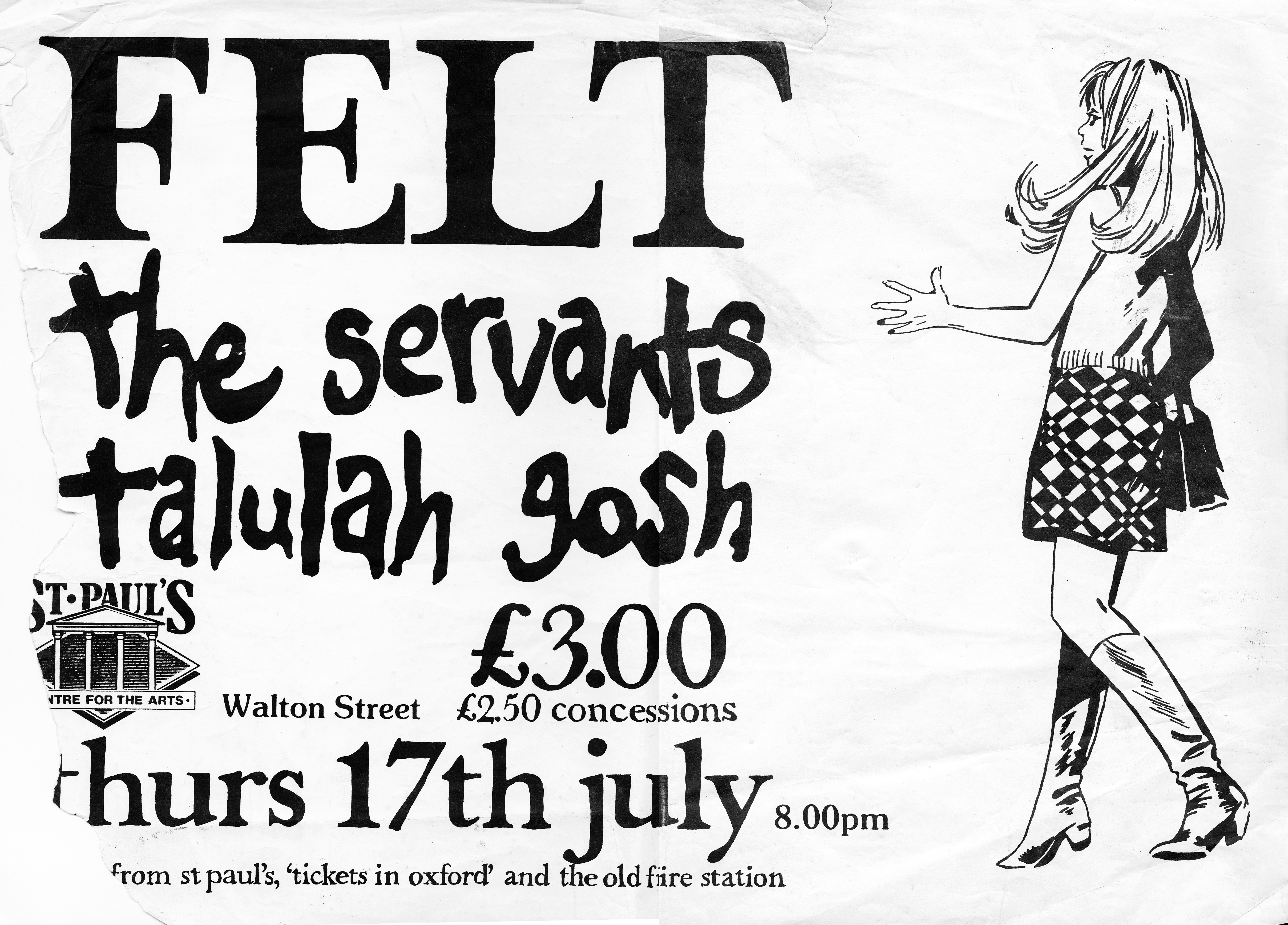
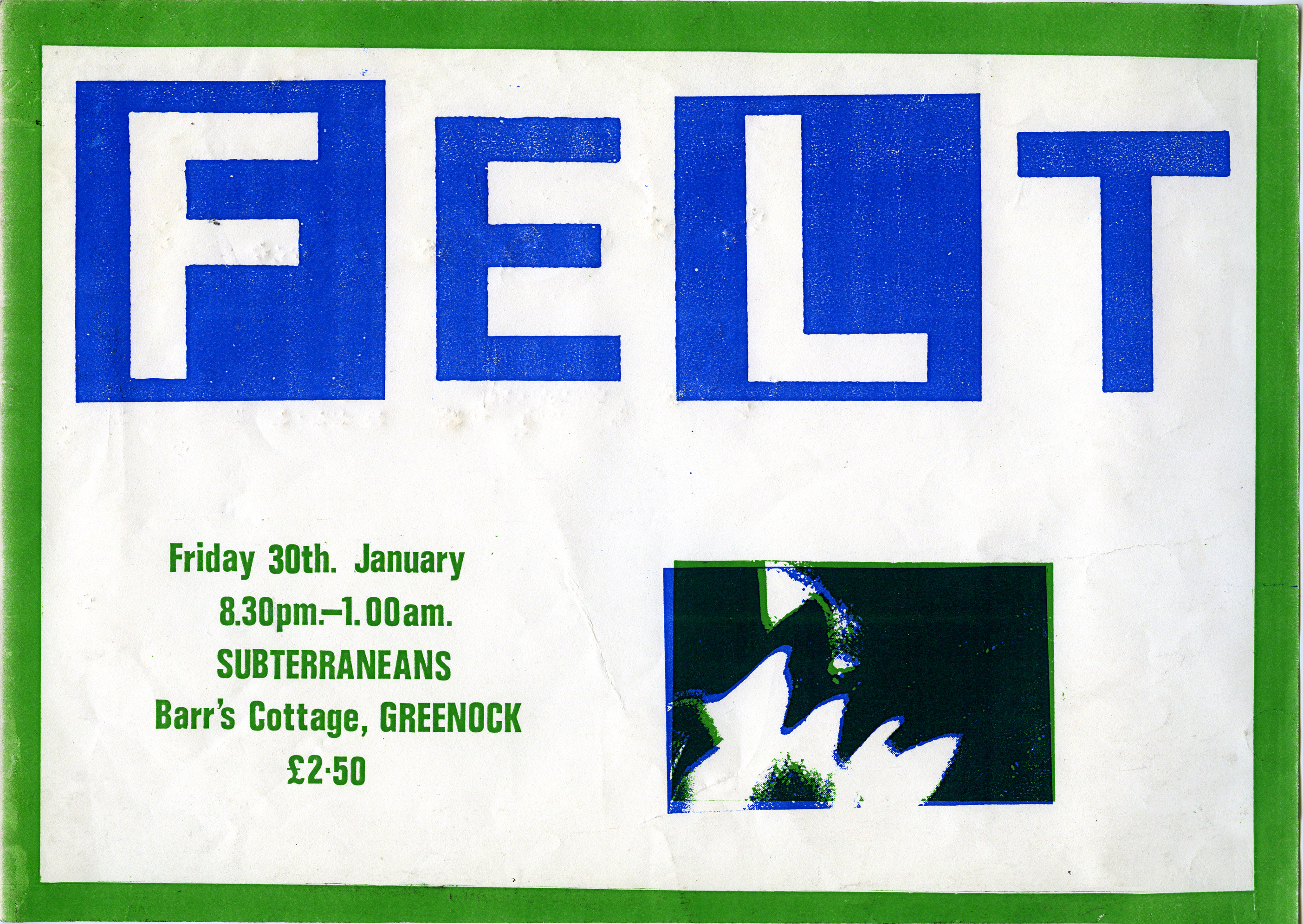
G : Do you have any contact with Maurice Deebank at all?
P : We did actually try and get in contact with him – but he didn’t reply.
G : It goes without saying but if you mention Felt to someone, Lawrence instantly pops up into their head.
P : It does. Yeah. That’s always the first question : “What does Lawrence think about this?”
G : To some people, I think, you know, Felt is Lawrence mainly because Lawrence has been in front of us all this time. The music press have always been fascinated with him, he always made for good copy. In lieu of a popstar, there’s now an enigma. There was a quote from Alan McGee where he said something like Lawrence was kind of mythologized and then he gladly became the myth, in a way.
P : With Feel, I thought it was a no brainer, really because a third of Felt songs were instrumental. So, it just seemed like the ideal thing to do. But yeah, the first question is always, “What does Lawrence think about it?” And my answer is, “What does Maurice Deebank? What would Martin Duffy?” If you think about it, about a third of our set is Martin and Maurice’s songs. So, it’s not just about Lawrence, you know. He says himself, “Coloured in by the band.” But when you have someone like Martin Duffy or Maurice Deebank doing the colouring in, it does take it from Painting By Numbers to a masterpiece on the wall of a gallery.
G : A lot of people, like me, never had the opportunity to see Felt, so you’re giving Felt fans something they never thought they would have. I’m delighted that I can go to a gig and hear those songs played by the people who were actually in the band and on those records.
P : After our first show people were saying, “You sound better than Felt ever did.” Part of the reason for that, I think, is because there was no money. Lawrence’s catchphrase was always, “There’s no money.” So, we’d literally have, like, one or two rehearsals, then we’d go on tour with our rat bag of amps. If you listen to that ULU show, which came out as a DVD (‘A Declaration’), I’ve got this little Peavey amp. I sound like Jean-Jaques Burnel. We had crap gear! I know bad workmen blame their tools but with Feel, Marco’s got some space that we could rehearse in, so we spent two weeks in total rehearsing. I think we’re doing it justice. And you could see the audience thought so too. At the Glas-goes Pop gig, we started off with one of Martin Duffy’s songs – ‘Candles In A Church’ – a piano song and then there’s a middle section of the set where there’s some more of Martin’s songs and there’s a song from ‘Train Above The City’ with Gary and Marco, jazzier stuff. I was a bit nervous about that because I thought, “Oh God, people are going to start talking.” But they didn’t. In fact, Martin, the keyboard player, started ‘Magellan,’ or ‘Ferdinand Magellan’ as it was originally known, and there was a sharp intake of breath. Marco said ‘Primitive Painters’ had never sounded as good.
G : I watched the footage of ‘Magellan’ on YouTube. It sounds amazing, quite incredible.
P : At the sound check, I walked off the stage to watch Martin play and I literally welled up. It was such a beautiful venue as well. You could see the emotional effect on the audience.
G : I think you can’t underestimate what these songs mean to Felt fans as well. And that track is such a special thing for Felt fans.
P : I remember going to NME journalist James Oldham’s wedding – he got married at Westminster Registry office and he had one of Martin Duffy’s piano songs playing when he got married. And of course, that’s another thing as well – you’ve got that tied into it, Martin’s tragic death.
G : Can you tell me a bit about working with Martin Duffy?
P : I first met Martin when we went round to pick him up from his mum’s to go to Germany on tour. He must have been only 18 – and a musical genius – but so humble with it. When Felt played live during one song – ‘She Lives By The Castle,’ maybe – or ‘Riding On The Equator’ – he would extemporise and go off on a long, beautiful journey on his keyboard – and we would wait for the nod for the change. I remember once backstage in Germany, there was an upright piano and he played it and we all gathered around. One of the songs he played was ‘C’est Le Vent Betty’ by Gabriel Yared. He also turned me onto ‘Sometimes It Snows In April’ by Prince.
Another thing for me is I never actually played on a Felt album, although I tried, on ‘Poem Of The River’ but it didn’t work out.
G : That’s a great record too.
P : Yeah but because of my memory of not playing on it, I don’t have fond memories but it is great. I prefer ‘Forever Breathes The Lonely Word’ because it’s a bit more polished. Also ‘Poem Of The River,’ Lawrence did literally want to throw it in the river, as he was so unhappy with the result – till Alan McGee forced him to put it out because Creation couldn’t afford to re-record it. I think that was the problem when I tried to play on it, the timing was all over the place. It was the first and hopefully last time that ever happened to me. Just a shame it was on a Felt record.
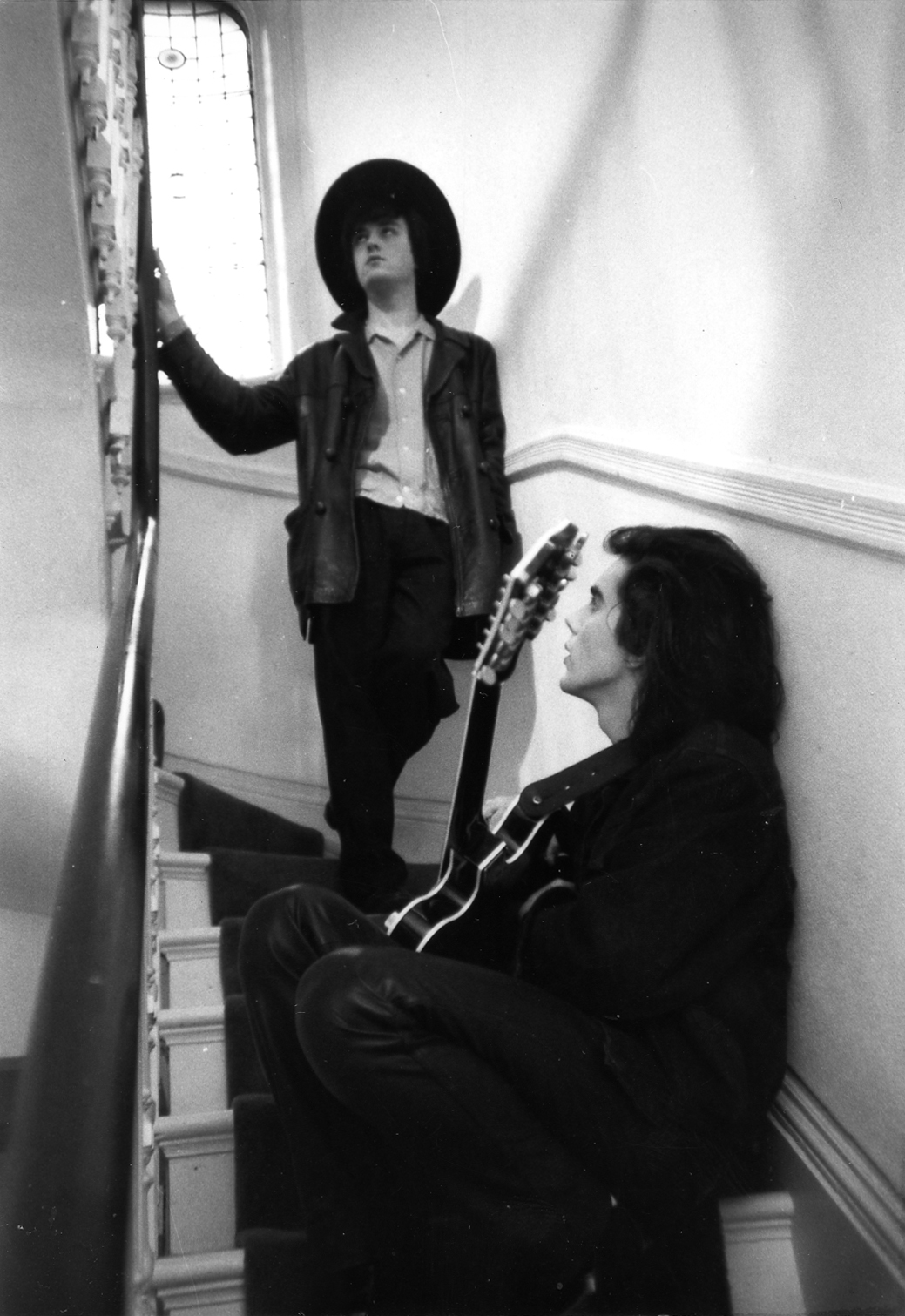
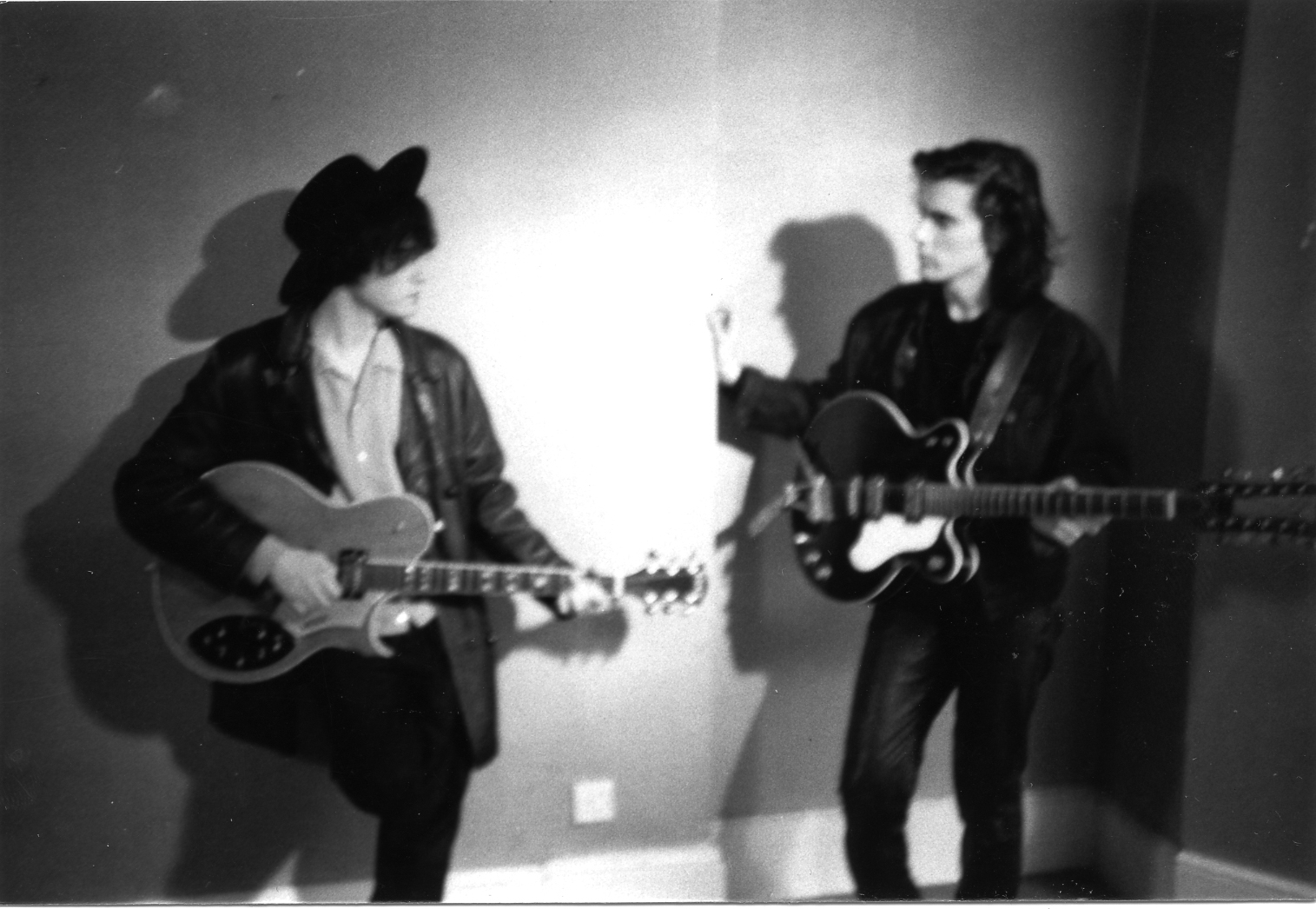
G : Y’know, I love them all…’The Splendour of Fear’, ‘Ignite The Seven Cannons,’ ‘Crumbling The Antiseptic Beauty’…
P : That’s why it’s so great doing these instrumentals because it’s all quite eclectic. You’ve got the Martin Eric Satie-type tunes and then you’ve got the jazzy instrumentals, which is like Bill Evans and then you’ve got the more guitar-centric stuff, you know and when we come to do the headline set, we’re going to do things like the catchily titled ‘Sempiternal Darkness,’ which sounds almost bloody medieval!
G : This is the other interesting thing for me because I’d never heard that kind of music played before. In the mid-‘80s, I was into indie music, I was into Mary Chain, My Bloody Valentine or whatever and then you’ve got this kind of – I don’t want to call it neoclassical – but Felt often had an almost baroque vibe that didn’t exist anywhere else at the time. And I guess that’s, particularly, Maurice’s contribution?
P : Well, especially when you look at the first five albums, how many songs were co-written? A lot of the music was Maurice.

G : And so, what are your plans for the future of Feel?
P : Well, we’re going to play the 100 Club at the end of March and Bristol the night before. We’re waiting on confirmation for some other shows too. Most of us are working, so it’s not like a thirty-date tour, it’s more relaxed. So, we’re doing weekends. It’s funny because our agent said, “That’s good because your audience don’t come out during the week anyway.”
But it feels great to play those Felt songs again and with good people and that’s why I don’t really want to focus on the bad experiences I’ve had. It’s so positive doing the music. And it is especially good for Gary and Marco too – to get something positive out of it all. And also, as I said, for the fans it’s like finding out your parents hate each other. They’re just not interested in the bad stuff. It’s difficult to change people’s opinions. It’s a bit like saying to somebody religious, “God doesn’t exist.” Because they’ve spent so much of their time believing and investing in this, what they think is fact, that they don’t want to disbelieve it, do they?
G : I loved the sound of Felt when I first heard them. Around 1986, someone gave me a mixtape with a Felt song on it and I was immediately intrigued. And then I went out and bought some records. But I always liked the fact that there was a kind of cohesion : the artwork was designed in a certain way, the titles were very poetic, most of the lyrics were kind of poetic. At the time I thought this is a band that poets would be into.
P : When I went up to Birmingham to rehearse, I stayed at Lawrence’s in Moseley and it was like something out of a Brian Rix farce. He had two beds that you pulled down from the wall and I slept in one and he slept on the other. And I was kind of expecting that he’d have these café society friends, that he’d hang out with, you know, fellow poets. But it was just him on his own, quite singular.
G : So, where does that come from, the eccentricity of Lawrence?
P : A lot of us grew up. I don’t think Lawrence really did. He’s Peter Pan. There’s that David Bowie quote, isn’t there? : “You grow into the person you always should have been.” But with Lawrence the whole thing is like, “No, I haven’t, you know. I’m still the same person I always was.”
G : It’s a stilted viewpoint in a way, isn’t it? He’s still expecting to be famous at any moment and have a model girlfriend who walks around naked all day long, etc. You read these things and you just think, is he is he pulling our legs here?
P : I think Lawrence does have this droll, Brummie sense of humour. He’s very deadpan and self-deprecating. So, I think some of it is he’s playing up to it and there is a humour in it.
We’re trying to give something back. And that’s why we don’t want to have a narrative; we don’t want to have a story. Just listen to the music.
I did ask John Mohan to be involved and he said, “Oh no, it’s a bit sad – old indie blokes getting back together.” And I was going, “No, John – think of it like we’re old jazzers, you know? When you’re growing up, you saw those old jazz guys just playing.”
G : And you can get people to guest every now and then, like Stuart Murdoch from Belle & Sebastian and Radhika.
P : Yeah, definitely. Stuart’s obviously always been a huge Felt fan – and was brilliant. And Radhika was amazing – she did Liz Frazer’s singing, which as you can imagine, is not easy – spot on. I’ve got a list of various famous people I’m thinking that we could have as guests. There’s a lot of secret Felt fans out there!
FEEL play The Croft, Bristol on Friday March 26th. Tickets here. And at The 100 Club, London on Saturday March 27th, 2007. Tickets here.
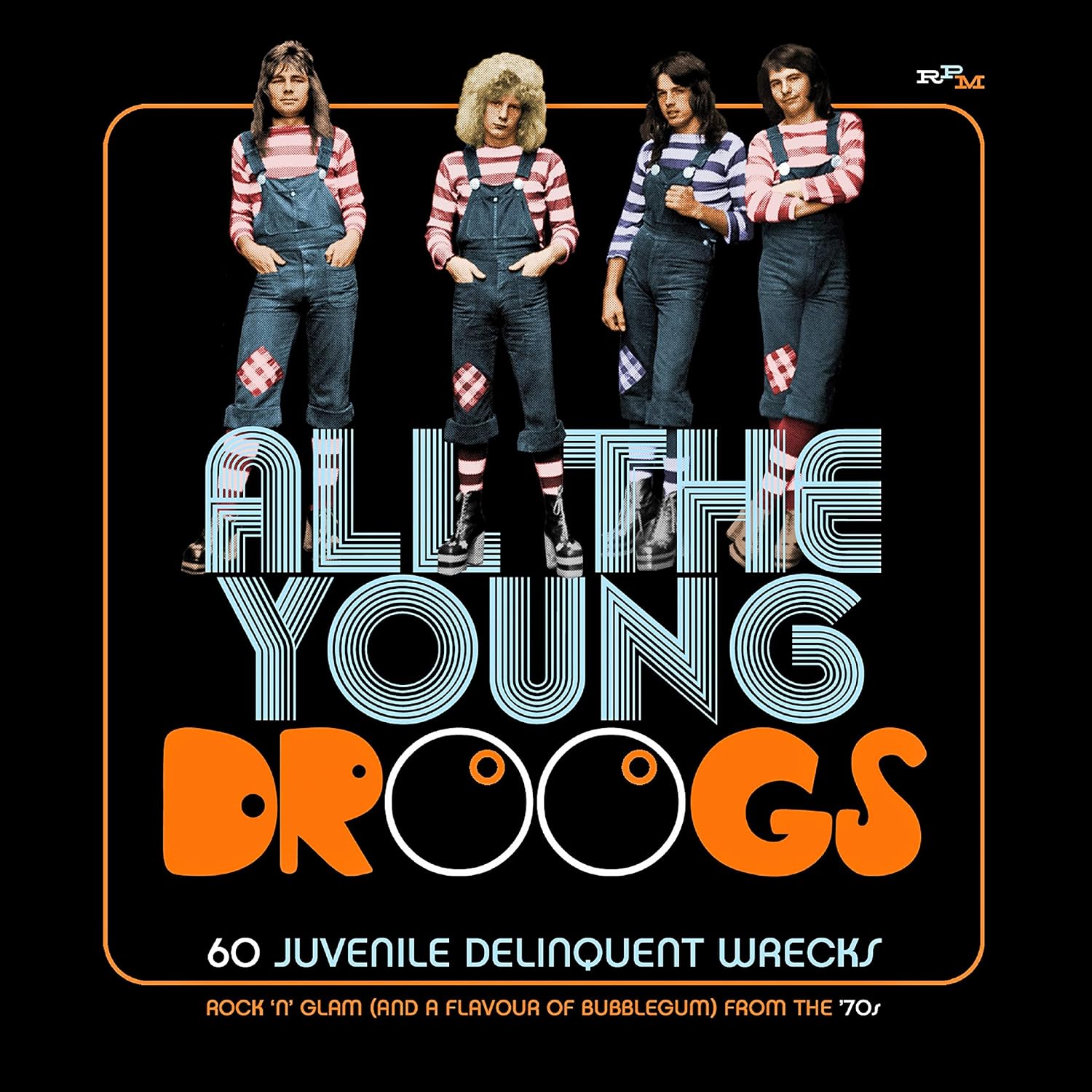
Philip King has curated two excellent compilations, ‘All The Young Droids – Junkshop Synth Pop 1978 – 1985’ (Nightschool) and ‘All The Young Droogs – 60 Juvenile Delinquent Wrecks, Rock’N’Glam (And A Flavour Of Bubblegum) From The 70’s’ (Cherry Red).
My grateful thanks to Philip King for his patience, time and for filling in the gaps.


A fun journey through the side streets, just off the bright lights of English Music. Always great to hear of Adrian Borland too.
Thank you, Marc. Glad you enjoyed it. I suspect Phil has plenty more Borland/Sound stories!